Coping with uncertainty, adapting to change, asking for support when things get difficult, and being able to get back on your feet… Resilience is one of the most important skills young people need today, not only in their education but in every area of life.
Guided by the “Young people matter at Eczacıbaşı” approach, Eczacıbaşı Group supports young people’s education, development, and well-being. Through the Dr. Nejat F. Eczacıbaşı Undergraduate Scholarship Program, run in partnership with the Turkish Education Foundation (TEV), the Group’s support goes beyond financial assistance, extending to areas ranging from career development and social life to holistic well-being and preparation for the future.
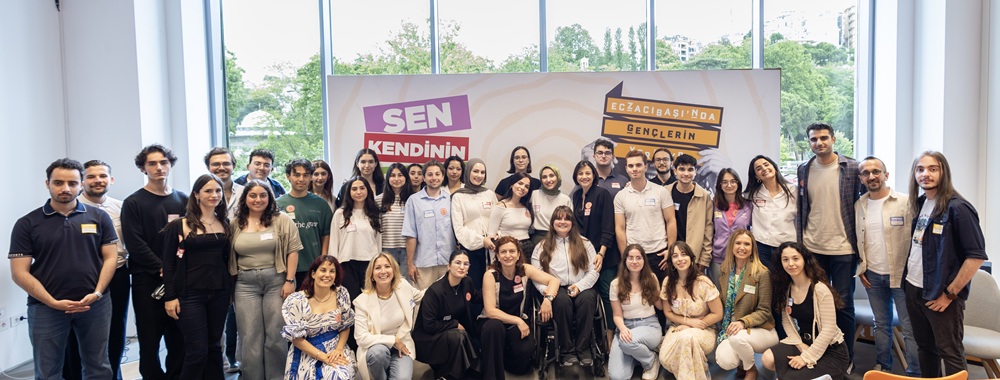
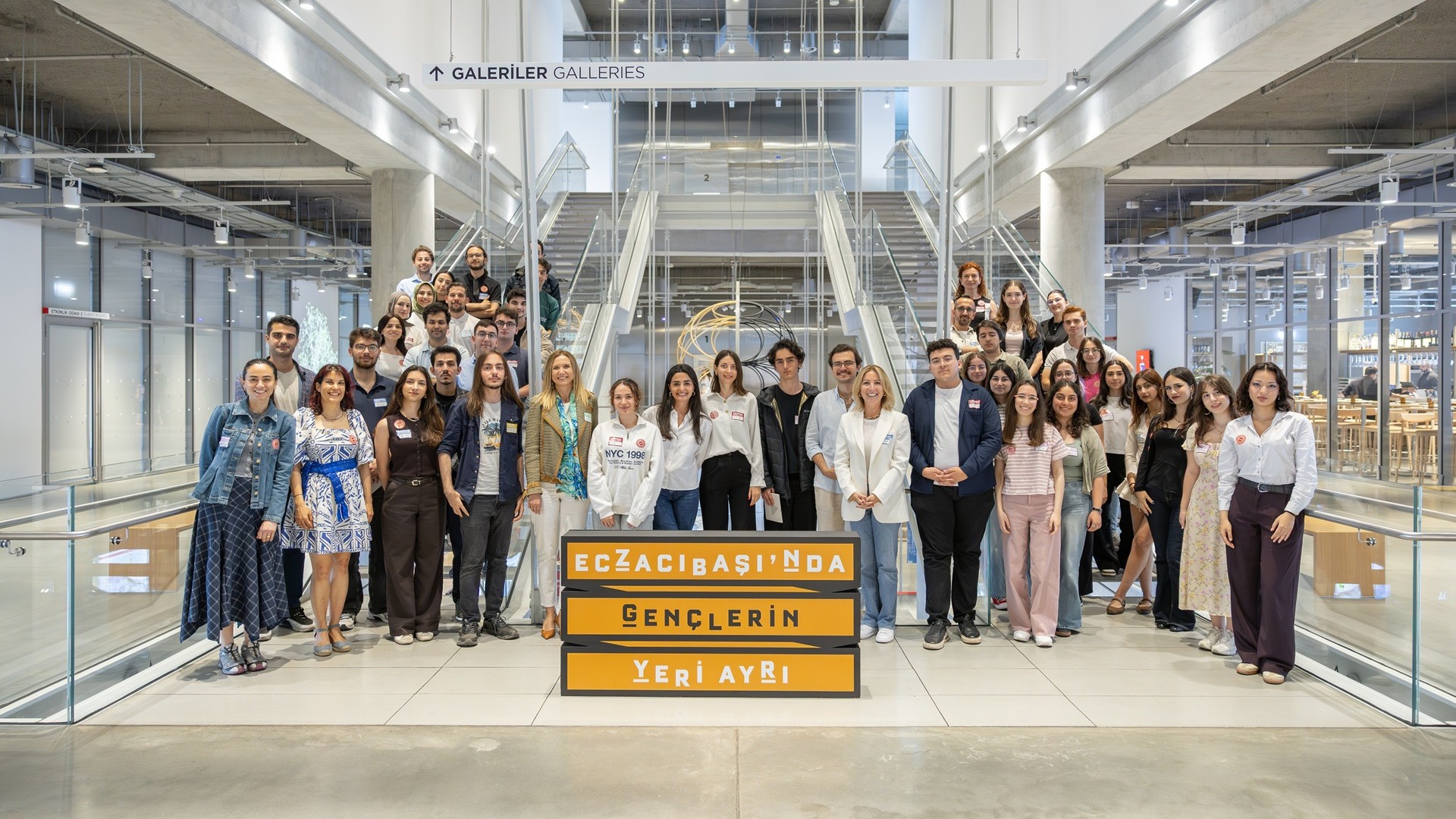
As part of this approach, scholarship recipients came together at Istanbul Modern. The day focused on resilience, a skill that is becoming increasingly important in navigating change and uncertainty, with particular attention to psychological resilience among young people.
The program began with opening remarks by TEV General Manager Melike Koçoğlu. This was followed by breathing and desk exercises led by instructor Irmak Yaşar. Later in the day, Paralympic national team archer Öznur Cüre Girdi shared with the scholarship recipients her journey from an unexpected turning point in her life to a sporting career filled with gold medals.
The gathering continued with a conversation moderated by İlkay Yıldırım Akalın, Eczacıbaşı Holding Corporate Communications Coordinator and Secretary General of the Dr. Nejat F. Eczacıbaşı Foundation, bringing together Prof. Dr. Itır Erhart and Evrim Bayam, CHRO of the Eczacıbaşı Group. With the participation of the scholarship recipients, the discussion began with the question of what resilience really means and explored it from different perspectives, including coping with uncertainty, a sense of purpose, curiosity, learning agility, and vulnerability.
We have compiled the highlights of the conversation for the Eczacıbaşı Life Blog.
İlkay Yıldırım Akalın: Resilience has been discussed a great deal in recent years, but it is also often misunderstood. When we think of resilience, we tend to picture people who are always strong, never fall, never get tired, and never give up. Yet all of us struggle from time to time. I think one of the most powerful portrayals of resilience in recent years can be found not in a psychology book, but in the 2015 Disney and Pixar animated film Inside Out. The film delivers a very simple yet powerful message: Joy alone does not make us strong. We also need sadness, vulnerability, and the ability to ask for help.
Professor Erhart, could resilience actually be about the relationship we build with difficult emotions? What do your work and the literature tell us about what resilience really means?
Prof. Dr. Itır Erhart: I first encountered this concept about ten years ago, when I became a facilitator for a resilience course at The School of Life Istanbul. Since then, I have continued to read and think about it, as well as deliver training on the subject.
Let’s start with the etymology of the word. “Resilience” comes from the Latin verb resilio, meaning for an object to “spring back” after pressure is applied and then released, or even to “spring beyond” its original position. At first, this may sound like simply “overcoming difficulties.” But resilience is not really about overcoming them. It is about accepting difficulties, losses, and change, and “springing beyond” them by turning these experiences into opportunities for growth.
If you would like to read more about this concept, I would recommend starting with Victor Frankl’s Man’s Search for Meaning. While in a concentration camp, Frankl observed that some people shared their food with other prisoners, tried to support them, held on to a sense of meaning even under extremely harsh conditions, and managed to survive.
Based on these observations, he concluded that our perspective on the world around us and on the challenges we face, as well as the stance we choose to take toward them, are part of our freedom and help determine our level of resilience.
I return to this book whenever I feel I need it. I reread it during the pandemic, for example. The pandemic itself was beyond our control, but how we responded to it was within our control. I tried to remind myself of that every day…
İlkay Yıldırım Akalın: We can sometimes misinterpret resilience in the workplace as well, equating it with always appearing strong, keeping up with everything, or remaining unaffected by whatever happens. Evrim, from your perspective, what do truly resilient people in the business world have in common? What qualities do you see in the young professionals who impress you today?
Evrim Bayam: I also think resilience is one of the concepts that is often misunderstood in the workplace. We tend to think of being resilient as never getting tired, never being affected, keeping up with everything, or appearing strong under all circumstances. But that is not what resilience means to me. Being resilient means recognizing when you are struggling, not hesitating to ask for support when you need it, getting back up when you fall, and moving forward having learned something from the experience. In other words, resilience is not about never struggling; it is about being able to move forward without losing touch with yourself when things get difficult.
I think truly resilient people share a few common qualities. First of all, they know themselves well. They understand what they can handle, the situations they find challenging, and when they need support. This self-awareness is extremely valuable, because the better you know yourself, the better you can manage both your limits and your potential.
Another quality they share is openness to change. When things do not go as expected or they face a new uncertainty, they do not see it simply as an obstacle. They are able to ask themselves, “What can I learn from this?” I think this perspective is one of the most important ways to remain strong in the workplace.
I also believe that having a sense of purpose is a very important factor. People who understand what their work means to them and can see the contribution they are making tend to stand more firmly in the face of challenges. This is because they value not only the outcome, but also the effort they put in and the journey that takes them there.
When I look at the qualities shared by the young professionals who impress me most today, curiosity, learning agility, and authenticity stand out.
They accept that they do not have to know everything, but they are not afraid to learn either. They ask questions, seek feedback, and think about how they can do better. I find that very valuable.
At Eczacıbaşı Group, one thing we see very clearly in every area where we engage with young people is this: In addition to experience, the business world increasingly values curiosity, learning agility, different perspectives, and openness to transformation. Young people today bring tremendous energy to the workplace in this respect. Beyond making a good start to their careers, they are looking for environments where they can contribute, feel that their ideas are heard, and create impact as they develop. We see every interaction with young people as an opportunity for mutual learning. As they gain experience of the business world, we also learn from their questions, perspectives, and capacity to drive transformation.
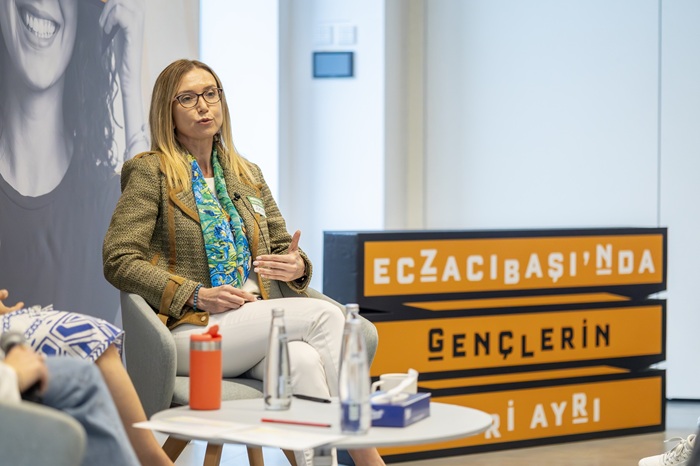
Evrim Bayam: “Resilience is not about never struggling; it is about being able to move forward without losing touch with yourself when things get difficult, and asking for help when you need it.”
İlkay Yıldırım Akalın: Thank you, Evrim. You explained it beautifully, and you mentioned “purpose.” Creating that sense of purpose is very important for us, but I would add one thing: it is also about being yourself. I think it is important for everyone to reflect on their own purpose in life. We need to ask ourselves, “Why am I here? Which values are non-negotiable for me?” Because if you do not have a world of your own and certain boundaries — which, of course, should also allow for some flexibility — it becomes difficult to find your direction and your path in life. When your sense of purpose is clear, it becomes a guide, and everything else begins to take shape around it.
We all come from different family structures and environments, receive different kinds of education, and go through different socialization processes. None of us grow up under equal circumstances. So, is resilience something we can learn and develop later in life?
Prof. Dr. Itır Erhart: I think we can learn it, because if resilience is related to our perspective and the way we think, then it is something we can develop. I have been teaching resilience for years, and bamboo is often used as a metaphor for it. But for me, the most powerful metaphor is the oyster. Do you know how an oyster makes a pearl? Its shell is normally closed, but it opens from time to time to feed. When it does, unwanted particles such as grains of sand or tiny fragments can get inside and irritate it. Because the oyster cannot easily expel this foreign matter, it begins to coat it with a substance it produces, eventually forming a pearl. That is how a pearl forms naturally. I think this is a very powerful metaphor, because resilience never develops inside our comfort zone. It is when we begin to move just beyond that comfort zone that we actually become more resilient.
Without that challenge, there is no real opportunity to practice growth and development. So try to balance this process with a little courage: the motivation and courage to step outside your comfort zone.
Sometimes life takes us there in ways we never expected or planned. We do not necessarily think, “I’ll take this step so I can become more resilient,” but life puts us in those situations, and that is where we grow. It is entirely about perspective. So yes, resilience can be learned, by gradually stepping outside our comfort zones and not being afraid to do so. When things get difficult, we sometimes fall. We get a bad grade on an exam, we are rejected, we experience heartbreak. These are all part of life, and they happen to all of us. They still happen to me, too. What matters is developing the ability to ask, “What did I learn from this?” rather than saying, “Everything is ruined, it’s over, I can never do this again.” I have failed too; I have had things go completely wrong. Being able to stop and ask, “What did I learn from this?” is something we can learn. And of course, being able to talk about what we are going through and ask for help is very important.
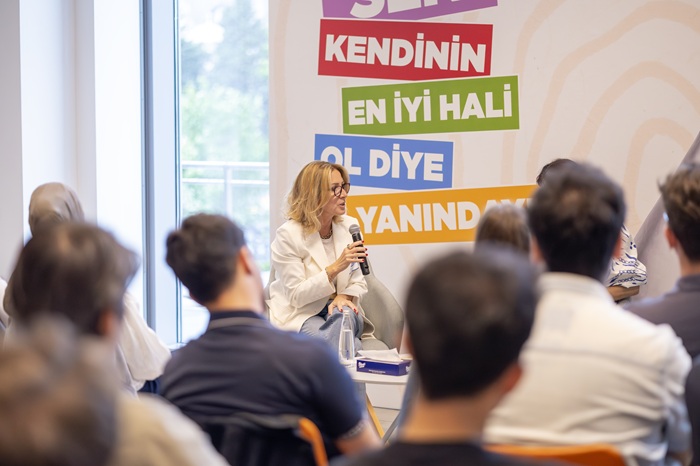
İlkay Yıldırım Akalın: “It is important for everyone to reflect on their own purpose in life. Without a world of your own and your own guiding principles, it becomes difficult to find your direction in life.”
İlkay Yıldırım Akalın: Yes, the oyster is a wonderful example. If we looked to nature more often and drew inspiration from it, I think it could change the way we approach many things. What do you think young people today should hold on to most strongly, and what should they be most willing to let go of?
Evrim Bayam: As I mentioned in response to the first question, the one thing they should definitely never give up is their curiosity. Curiosity is what keeps us dynamic, helps us learn, and enables us to bring better ideas to life in better ways. Never lose your curiosity.
If you ask me what they should let go of, I would say the constant pursuit of perfection, that all-or-nothing mindset. You know that feeling of inadequacy where you keep thinking, “I’m not good enough, I need to be better,” but nothing ever feels sufficient?
That is what we need to let go of. Please move away from the tendency to think that if you cannot reach the perfect ideal in your mind, then nothing you have done counts and you may as well give up. You are already valuable and worthy just as you are.
Of course, we should always strive to do better, but not in order to be perfect. Strive to be yourself and to reach your own goals. As the saying goes, “Perfect is the enemy of good.” Make sure you have genuinely done the best you can. That is enough.
Prof. Dr. Itır Erhart: I would add “excitement” alongside curiosity, my dear friends. Whatever excites you, never give it up. I still ask myself, “What is exciting me these days?” It could be a new sport, a new person, or a new way of life. We often suppress our excitement because we see it as something that might lead us off course. Yet when something excites you, there is usually something in it that belongs to you; that feeling is telling you something. Follow your excitement and you will not regret it, whether you are choosing a job, a partner, a sport, or a trip.
It is also very important to be able to live with our vulnerabilities. From the outside, someone’s life may look wonderful, but we all have vulnerabilities, and we are strong when we can exist with them. Rather than trying to free ourselves from our vulnerabilities, we should embrace them.
As for what we should let go of, I personally stay away from people who constantly say things like, “Why should it be you? Are you the one who’s going to do it? Who do you think you are?” I do many things in civil society that give me a sense of purpose and excite me. I became vegan, and there are people who come up to me and say, “So what changed because you became vegan?” I tune them out and keep my distance. Instead, keep close the people who say, “What you’re doing is great. How can I support you? What can we do together?”
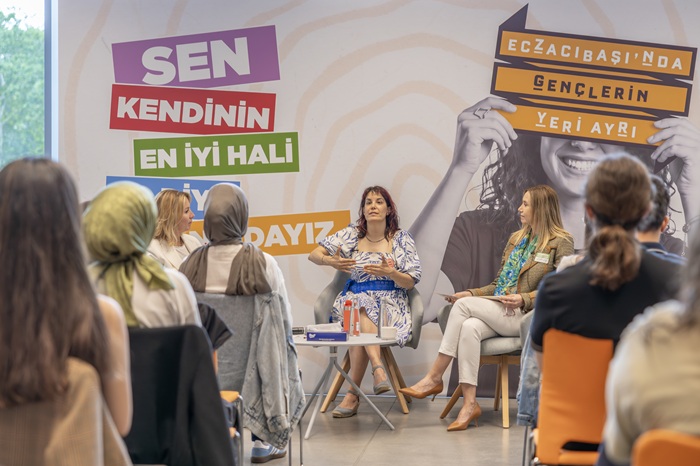
Prof. Dr. Itır Erhart: “It is very important to be able to live with our vulnerabilities. Rather than trying to free ourselves from them, we should embrace them.”
İlkay Yıldırım Akalın: One of the strongest themes that emerges in our conversations with scholarship recipients is not failure, but uncertainty. There are many concerns such as, “Am I studying the right subject? What am I going to do now? Will I be able to find a job? How will I support myself? Should I move abroad?” How should we think in order to feel better equipped to deal with uncertainty? What do people who cope with uncertainty well do differently?
Evrim Bayam: I think uncertainty is simply part of life. Do we know what is going to happen a minute from now? No.
In fact, every moment of life involves uncertainty. What matters is recognizing this and, instead of being overwhelmed by worry and anxiety, finding that sense of purpose for ourselves. What do we want to do? What are we aiming for? That is the critical part. Because if we choose to see ourselves as victims and trap ourselves in uncertainty, we remain stuck and cannot move forward. Life is like that anyway. But if I know what I want, I can make an effort in that direction. I may put in the effort, but the path may not take me exactly where I planned, because life never moves in a perfectly straight line. Life is like a heartbeat: one day we are up, the next we are down. If the line were stable and completely flat, life would be over.
Let me give you an example from my own journey. I was someone who loved solving problems and taking things apart and putting them back together, so I decided, “I’m going to become an electronics engineer.” In the early 1990s, as a female student, I attended an Anatolian Vocational High School. But while I was studying there, I realized that I loved the engineering mindset and that systematic way of thinking, but I did not actually want to become an electronics engineer. I had the courage to make that decision and changed direction toward industrial engineering.
While studying industrial engineering, my dream was to work in manufacturing, out in the field. During my internships, I spent hours in workshops where machining and fitting work was carried out. Then I realized, “This is great too, but apparently this is not what I want either,” and I turned toward technology and innovation. In the 2000s, I went to the United States and completed a master’s degree in telecommunications and information systems management. My parents were teachers, so finding a scholarship was really my only option. I kept knocking on doors, probably pestered a few professors along the way, and when they saw how determined I was, they awarded me a scholarship.
My path still did not become linear. I started out in sales and marketing in the United States, then returned to Türkiye and worked at a telecommunications company, where I was involved in business development, mergers and acquisitions, and innovation processes. Later, I founded my own company, grew it, and sold it. None of that was easy either. Eventually, my journey brought me to human resources, a field that brings together communication, strategy, technology, and sustainability, and for the past six months I have been leading the Human Resources teams at Eczacıbaşı Group.
As you can see, my journey has been full of ups and downs. Whenever I was offered a role I did not know, I said, “I don’t know how to do it yet, but if you teach me, I will learn and understand.” What matters is accepting that even when we set goals, those goals can change, and finding the point that feels right to both your heart and your mind. If you allow life to flow with both your heart and your mind, and if you find that sense of purpose, life somehow takes you where you need to go.
Prof. Dr. Itır Erhart: Evrim put it so beautifully. Guys, we need to have a purpose greater than ourselves. When I was in high school and university, I was always thinking, “I should get into the best school, graduate at the top of my class, and build the best career.” But I discovered the real meaning in my life when I started volunteering at university.
For the first time, I said to myself, “Itır, you have done something useful, something truly meaningful.” I volunteered on weekends, teaching children to support equal access to education, and I worked at a children’s hospital. Volunteering has always been part of my life, and during my most difficult times, when I was struggling with uncertainty, it became a story greater than myself that I could hold on to.
Think back to the pandemic. Through Adım Adım, we used to run to raise funds for civil society organizations such as TEV. Then suddenly we were confined to our homes. Races were cancelled, we could not run, and hundreds of NGOs depended on those funds to carry out their projects. I am not someone who is used to sitting at home, so I became very discouraged. Then I told myself, “Itır, we may be at home, but there must still be something we can do.” We saw a man in France running a marathon on his balcony.
One of our friends quickly developed an app, and two of us ran 42 kilometers inside our own homes. In my small apartment, I completed exactly 2,000 laps, practically bumping into the walls along the way. But through that effort, we raised an incredible amount for the Lokman Hekim Health Foundation to provide protective clothing and masks for healthcare workers. Later, we also arranged computers for TOG.
Instead of complaining, I held on to my larger purpose. I told myself, “I am here to create value. I can mobilize people,” and that helped me break out of the cycle I was in. Whenever you hit rock bottom, that larger purpose can pull you back up. Of course, you do not have to run a marathon in your own home. I certainly never did it again.
And truly, follow what excites you. I was at a good university, I had completed a great master’s degree, and I had a job, but then I fell in love with someone at a wedding. I got very excited and thought, “I’m going to give this relationship a chance,” so I packed up and moved to Chicago on a whim. There, I saw a poster at a bus stop that read: “Think a marathon is hard? Try chemotherapy.” It was such a powerful message that it really struck me. I became curious about the connection between marathons and chemotherapy and discovered that people were running to raise funds for leukemia and lymphoma research. I thought, “Why not? We can do that too.” Today, 140,000 people run with Adım Adım, millions have been raised in donations, and we have even opened a branch in the Netherlands. It all started with that courageous step I took by following my excitement. So be brave, and follow what excites you.
Today, 140,000 people run with Adım Adım, millions are raised in donations, and we have opened a branch in the Netherlands. It all began with that courageous step I took because I followed my excitement. Be brave and follow what excites you.
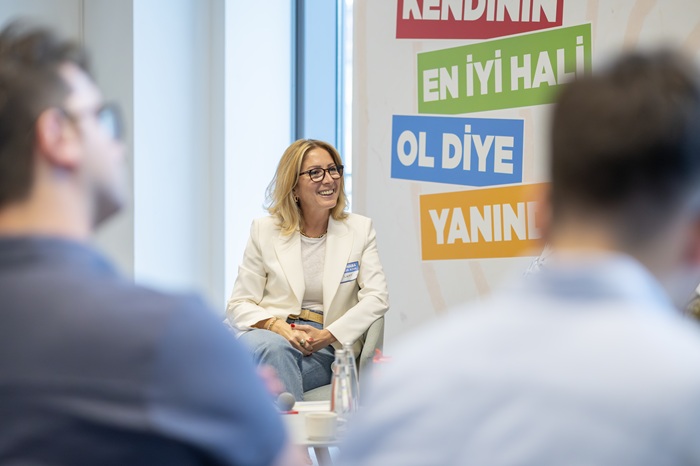
İlkay Yıldırım Akalın: “One of the strongest themes that emerges in our conversations with scholarship recipients is not failure, but uncertainty.”
İlkay Yıldırım Akalın: Uncertainty and crises can push us to be more creative, and stepping outside our comfort zones helps us grow and develop. Let me ask both of you one final question: Ten years from now, when our scholarship recipients look back on today, what is the one sentence you would want them to remember?
Evrim Bayam: I would say, “Collect more ‘I’m glad I dids’ than ‘if onlys.’” To do that, always keep your curiosity and learning agility with you. And one last thing: Whenever I have a decision to make, I take my mind and my heart out for coffee. You can take yours out for tea if you prefer; it does not matter. But your mind and your heart will always show you the right path, so do not forget to follow them.
İlkay Yıldırım Akalın: Of course, one without the other is not enough. We should not leave the mind without the heart.
Evrim Bayam: Absolutely. The two of them have coffee and talk things through together. I rely on this a lot when making decisions, and so far they have never led me astray. I recommend it to all of you.
Prof. Dr. Itır Erhart: I would add this: It is very common to hear people say, “We are living through such a terrible, disastrous time.” But I sincerely believe that we are living in a period when life is easier than it has ever been, life expectancy is at its highest, and child mortality is at its lowest. People before us lived through wars and coups as well. The Second World War was less than a hundred years ago. I was in Hiroshima recently. People were simply on their way home when an atomic bomb was dropped on them, yet today there is a wonderful city there that has been rebuilt, along with a museum. So we need to move away from that dramatic victim mindset. Instead of saying, “All these things happened to me,” we should ask, “Given the circumstances I am in, how can I do the best I can for myself, the people around me, and the planet?”
I had the opportunity to host one of my heroes, Jane Goodall, in Istanbul for two days before she passed away. She was in her nineties, yet every morning she woke up with the same enthusiasm, excitement, and hope. As Jane Goodall writes in The Book of Hope: “Every single one of us makes some impact on the planet every single day, and we get to choose what sort of impact we make.”
Today, I could have chosen to sit at home and say, “I was born into a terrible time.” Instead, I chose to meet another group of young people this morning and to be here with all of you now, and I am very happy I did. We get to decide what kind of impact we create each day. I hope Jane’s perspective inspires you too.
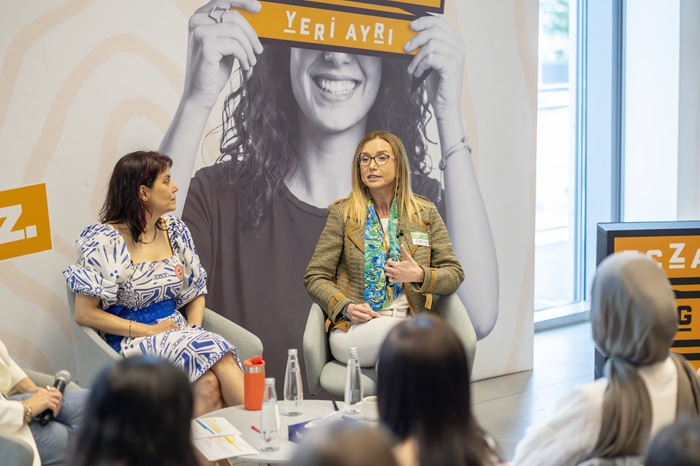
Evrim Bayam: “Uncertainty is simply part of life. What matters is recognizing this and, instead of being overwhelmed by worry and anxiety, finding our own sense of purpose in life and following it.”
İlkay Yıldırım Akalın: Thank you very much to our guests. Now we would like to turn the floor and the microphone over to you for your questions.
Kerem Eraslan (Boğaziçi University, Political Science and International Relations): I recognize that living conditions today are better than they were in the past, but I still cannot shake the sense of hopelessness and loneliness that my friends and I share. We have very serious concerns such as, “Will I be able to own a house or a car in the future? Will I be able to find a job after I graduate?” And these concerns are not going away. There are things happening outside my sphere of influence, and they are not issues I can solve simply by being resilient on my own. At that point, you start wondering whether you should pull back or stop making sacrifices, and that begins to undermine your resilience. How can we find a way forward?
Prof. Dr. Itır Erhart: I understand you very well. First of all, let me say this: I am 50 years old, and I have never owned a house or a car. I have never tied my happiness or hope to those things. I have devoted everything I have to leaving a meaningful legacy and to Adım Adım. Perhaps that is one way of looking at it. We need to redefine for ourselves the codes of success and the expectations imposed on us around owning a house or a car. Of course, when I was 20, I had the same concerns you do. It took me a long time, and many ups and downs, to reach this sense of calm. But if you ever need a reminder that hope is always possible, look at Mandela or Jane Goodall. Even in some of the most difficult periods in history, there have always been people who managed to create hope and meaning, and who continue to inspire us. Do not expect too much from yourself right now. Give yourself time.
Evrim Bayam: “Who, if not us? When, if not now?” That is the question we should be asking. Instead of saying, “Why did this happen to us? What are we going to do?” what matters is focusing on what we can do within our own sphere of influence. As Rumi said, “Start walking, and the path will reveal itself.” When we lose hope, our brains automatically switch into fight-or-flight mode, and the part of the brain responsible for rational thinking stops functioning properly. We cannot produce anything in that state. But as you begin to create, make an effort, and take action, you draw energy from it and hope begins to return. When you change your perspective, new doors begin to open.
İlkay Yıldırım Akalın: Things may be difficult right now, but this is not the final chapter of your story. What matters is how you protect yourself during this period, and how you stay true to who you are and to the values you believe in.
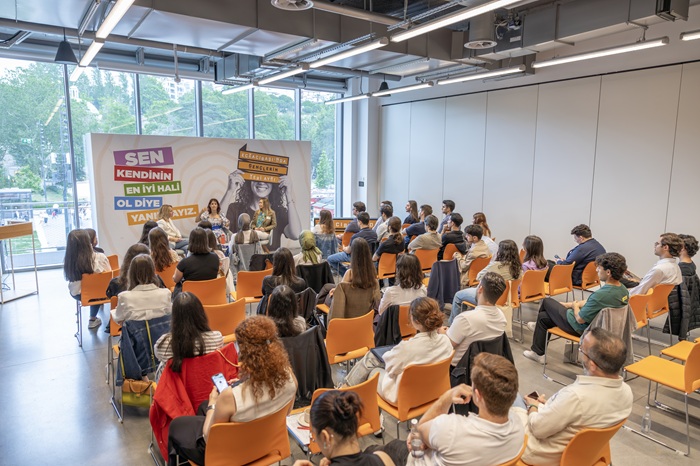
Prof. Dr. Itır Erhart: “We get to decide what kind of impact we create each day.”
Tuğrul Berke Mendeş (Koç University, Medicine): In difficult situations, trying to cope on our own is not always enough. Sometimes we need support or role models. What can we do collectively in schools, workplaces, or society to build resilience?
Evrim Bayam: Rather than talking only about our concerns, we should focus our conversations on questions like, “What can we do, and how can we do it?” Change begins with the individual. As your words, language, and energy change, that change spreads to the people around you like a Mexican wave. The first step toward strengthening resilience in society is to create more of these constructive conversations.
Prof. Dr. Itır Erhart: I say this very sincerely: unfortunately, universities and their curricula have fallen far behind the needs of today, whether we are talking about artificial intelligence or the “soft skills” we have been discussing, such as self-efficacy and resilience. Alternative structures and scholarship programs, like the one that has brought you here today, are helping to fill the gaps that universities cannot. Make the most of these opportunities. Organizations have understood this much better. Organizations like Eczacıbaşı care about their employees’ well-being. Try to be part of organizations that value you as a person, rather than looking only at profit figures.
İlkay Yıldırım Akalın: This is exactly where we asked ourselves what more we could do, and we added a psychological support module to our scholarship program in collaboration with Evital. We will also come together with TEV again to discuss what more we can do to strengthen resilience and these competencies.
Fatma Aksu Arıuçar (TEV, Community Development Manager): We hear these concerns from young people very often, and please know that you are never alone. When strong institutions such as TEV and Eczacıbaşı come together, it becomes much easier to provide this kind of support through budgets and institutional partnerships. But most importantly, look around you. You are each other’s greatest source of support. Stay connected with your university clubs and WhatsApp groups. Socialize by saying things like, “Let’s get together. Who wants to go to the movies? Is anyone studying?” We all need someone alongside us, so do not hesitate to ask for that companionship. These scholarship groups are among the most natural support networks you have.
Prof. Dr. Itır Erhart: Never hesitate to ask for help, guys. Together, we can always find a solution.
Azra Aylin Kul (Istanbul Technical University, Industrial Engineering): As I look for an internship, I feel as though we always have to present the perfect version of ourselves to companies, and that if we talk about our shortcomings, we will be eliminated. My brain says, “Tell them these things,” while my heart says, “But I also want to learn these things, and these are the areas where I still need to improve.” How should we strike that balance, and what do companies expect from us?
Evrim Bayam: Thank you, Aylin. Authenticity is absolutely what makes the difference, because the person on the other side can tell whether or not you are wearing a mask. When you show up as yourself, you convey the message, “This person knows themselves, understands what they want, and is open to development.” But when you try to mask who you are, the other person may think, “Either this person does not really know themselves, or they are putting on an act for us.”
We look for people who are honest, respectful, and transparent. These are also among the core values of Eczacıbaşı Group. I have been working for 27 years, and I have never once dreaded going into the office, because I have always worked for companies whose values aligned with my own. If you are at a company that forces you to pretend to be someone you are not, then you are already in the wrong place. When you cannot be yourself, sooner or later you begin to complain, which creates a toxic environment and eventually leads to parting ways. Choose companies where you can be yourself and create value.
İlkay Yıldırım Akalın: Spending this time with you has been wonderful for us, and I hope this conversation has been just as meaningful for you. Thank you all very much for joining us.