
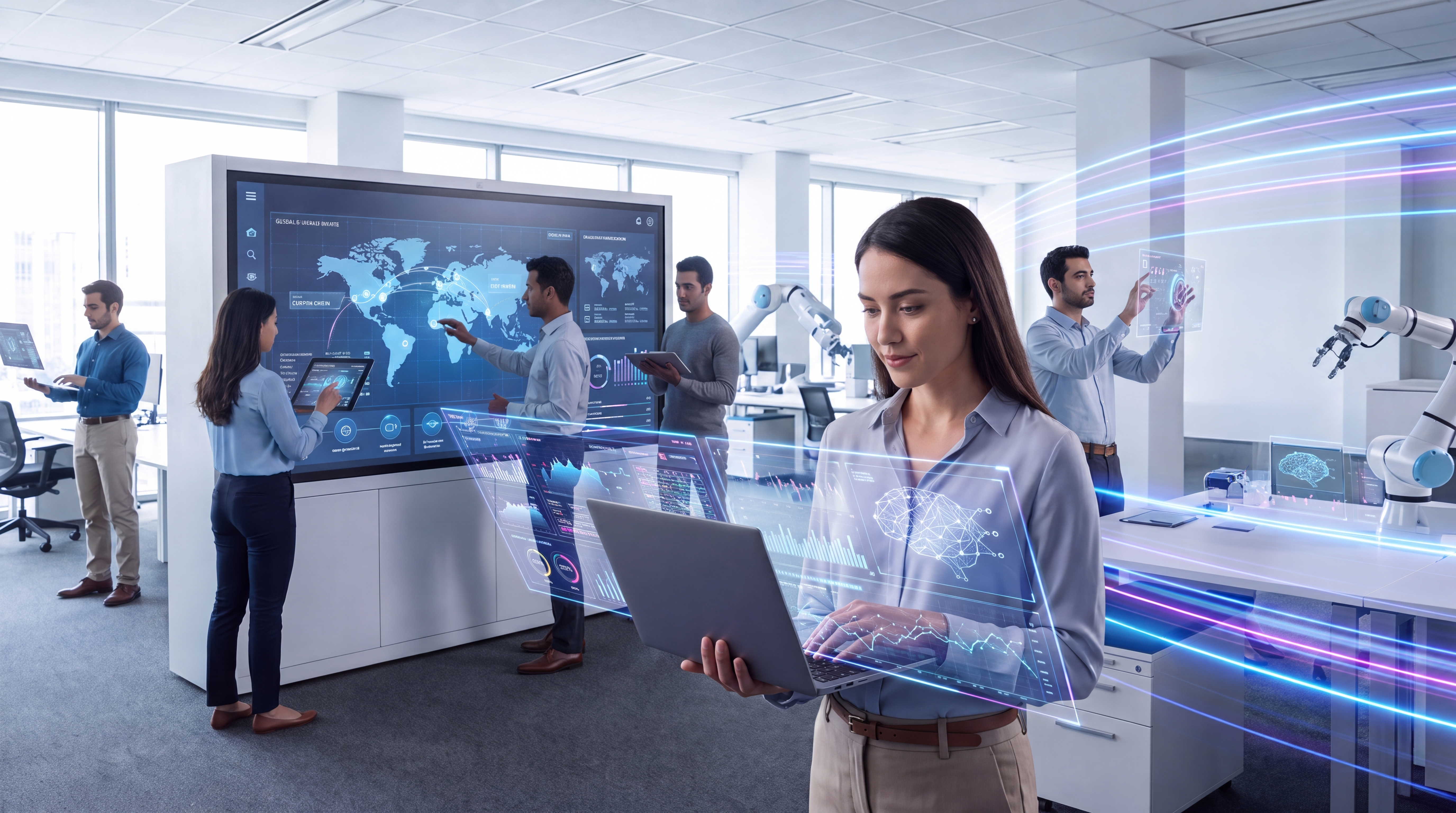
The pace of technological change and its impact on the workplace are rapidly ushering organizations into a new era of learning. Processes are being redesigned, decision making is evolving and workflows are increasingly powered by data. This shift calls for not only technical expertise, but also a new workplace culture built around learning to think and work with technology.
The World Economic Forum’s Future of Jobs Report 2025 shows that technological change, the green transition and economic uncertainty are reshaping the workforce, creating new roles, transforming existing ones and making certain skills essential. Gartner’s Future of Work Trends 2025 paints a similar picture: as companies accelerate their investments in artificial intelligence and automation, developing employees’ digital and technological capabilities has become a critical priority. These findings suggest that the true impact of digital transformation comes not from technology itself, but from people’s ability to think with technology, experiment, work with data and redesign processes.
Developed by the Eczacıbaşı Group in collaboration with Istanbul Technical University, the Business Technologist Program provides a learning environment aligned with these global trends. Over nine weeks, participants focus on business needs, review their processes and explore digital solutions that can improve them.
For the Eczacıbaşı Life Blog, we brought together different perspectives on this transformation.
We spoke with Evrim Bayam, CHRO of the Eczacıbaşı Group, Merve Kerse, IT Projects Manager at Eczacıbaşı Holding, Prof. Dr. Alp Üstündağ from Istanbul Technical University and program participants Yılmaz Mert Akın and Berfin Yıldız.
.jpg)
Evrim Bayam, CHRO of the Eczacıbaşı Group: “The ability to understand technology will no longer be enough. Those who use it to improve and transform their work will make the difference.”
The 2025 outlook published by organizations such as the World Economic Forum shows that technology is reshaping the workforce. How do you view this transformation?
Describing the transformation we are experiencing today simply as a “technological transformation” does not fully capture its scope. What we are going through is, above all, a shift in mindset and perspective.
As the World Economic Forum and similar research indicate, the key issue is no longer access to new technologies, but how we think, make decisions and create value with them.
In the past, technology was often seen as the domain of specific areas of expertise. Today, it has become a natural part of everyone’s work, from production and marketing to human resources and finance. This tells us something important:
The ability to understand technology will no longer be enough. Those who use it to improve and transform their work will make the difference.
I look at this transformation from three main perspectives:
· Faster decision making, closer to where the work happens
· The wider adoption of data driven thinking and evaluation
· Moving beyond identifying problems to solving them
For example, a colleague working in the field will be able to analyze their own process and develop solutions to improve it. This ability, reflected in “improves and transforms,” one of the Eczacıbaşı Behaviors, is emerging as an important factor in an organization’s competitiveness.
What is critical for us is to distinguish between purpose and means when it comes to technology, and to focus on empowering people through technology rather than placing technology at the center.
Technology alone is not enough to create a sustainable difference. Real impact comes from people who design it for the right purposes, experiment with it, learn from it and continuously reshape it.
What areas should organizations prioritize in their learning and development strategies during this transformation? What is Eczacıbaşı’s strategy and approach?
This transformation sends a very clear message about learning: it is no longer a separate “training activity,” but an integral part of work.
I believe companies need to focus on three areas in particular.
The first is digital and data literacy, and more broadly, digital citizenship. It is critical to build an organization where everyone can communicate through data, interpret it and incorporate it into decision making, while developing the necessary capabilities across all functions.
The second is problem solving and systematic thinking. Defining the right problem has become more valuable than finding the right solution. Equally important is solving the right problem with the right tools.
The third is learning agility. What moves us forward is no longer simply what we know, but how quickly we can learn and adapt. Sometimes, this also means unlearning what we know and learning anew.
At Eczacıbaşı, we aim to move beyond traditional training models as we support this transformation. We create structures that integrate learning into daily work, enable people to learn through hands-on experience with real business problems and generate tangible value.
The Business Technologist Program is one of the clearest examples of this approach.
Through the program, we aim not only to introduce our colleagues to new tools, but also to help them view their work from a different perspective and apply what they learn to their business processes.
Real transformation begins when an employee asks, “How can we improve this process?”
This is also the most valuable change we see through the program. Business units move beyond simply defining problems and take an active role in developing solutions.
I believe this will help us become a more agile, productive and fast-learning organization that creates greater value. Technology only makes an impact when it is understood, embraced and put into practice by people.

Merve Kerse, IT Projects Manager at Eczacıbaşı Holding: “Decision making processes are accelerating, and technology is becoming a natural part of the way we work.”
What need gave rise to the Business Technologist Program at Eczacıbaşı? How was the program designed, and how did the targeted transformation take shape?
I would first like to answer the question of who a Business Technologist is. A Business Technologist refers to employees outside IT who create solutions for the business by using technology. It is expected that a significant share of digital solutions will increasingly be developed by these profiles.
When designing the program at Eczacıbaşı, this outlook became an important reference point for us. Because across our business units, we have a very strong talent base made up of people who know the processes best, can define problems accurately and are eager to transform their work through technology.
The Business Technologist Program was launched in 2023 to turn this potential into a systematic capability.
The program offers all our colleagues across Eczacıbaşı Group business units a journey that starts with building awareness and extends to developing solutions for real business problems. What we expect from those who want to join the program is to have a real business problem, be willing to solve it and be curious about technology.
The aim is not only to provide technical knowledge, but also to develop the ability to think with data, define the right problem and take ownership of the business impact created. The transformation we target is to increase the number of high value added application examples emerging from business units and to make technology a shared way of working at Eczacıbaşı.
How are the nine-week learning experience at ITU and the graduation projects reflected in ways of working and problem solving approaches at Eczacıbaşı?
The nine-week module we run with Istanbul Technical University is one of the most transformative steps of the program. During this process, participants not only learn new tools such as KNIME and Python, but also experience how to approach a problem end to end, analyze it based on data and develop solutions.
The graduation projects are selected entirely from real needs within Eczacıbaşı business units. The solutions developed for these needs are presented as graduation projects at a graduation day attended by senior management. This experience fundamentally changes employees’ perspectives. Problems are no longer seen as “requests submitted to IT,” but become initiatives owned and solved by business units.
As a result, decision making processes accelerate, solutions become more agile and technology becomes a natural part of everyday ways of working at Eczacıbaşı.
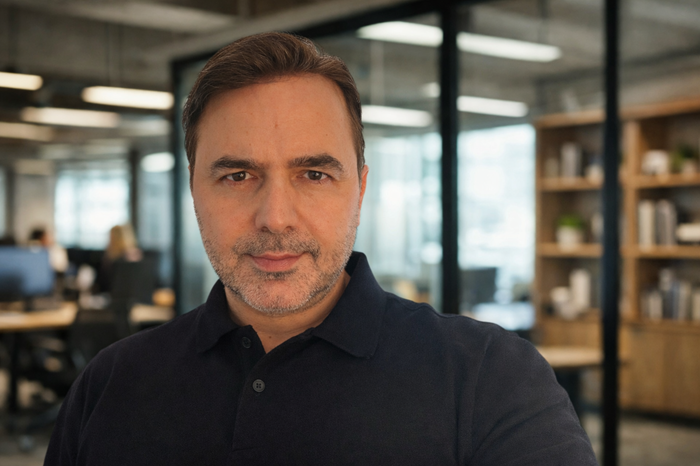
Prof. Dr. Alp Üstündağ, Head of the Data Engineering and Business Analytics Department at Istanbul Technical University: “Companies’ real business problems also feed academia’s research agenda. This mutual interaction creates a strong learning cycle.”
We are witnessing a transformation in industry–academia collaboration. How does this new generation of certificate programs, which goes beyond conventional graduate education and offers a more tailored approach, differ from traditional university models in terms of program design, learning structure and content?
Traditional graduate programs generally follow a predefined curriculum and focus primarily on theoretical depth. In tailored certificate programs, however, the process works the other way around. We begin by jointly analyzing the company’s real business challenges, strategic priorities and skills gaps. The content is then shaped around these needs.
Rather than working on hypothetical case studies, participants use real data and develop real projects from within their own organization. Learning becomes a dynamic process that begins in the classroom, extends into the workplace and continues as part of the work itself.
In rapidly evolving fields such as artificial intelligence, data analytics and digital transformation, we also use modular structures that are regularly updated and responsive to industry dynamics, instead of relying on a fixed curriculum. This allows us to maintain academic depth while prioritizing agility and practical application.
Where do you think the main value creation area lies for universities in these kinds of programs? How would you define the key outcome these programs aim to achieve?
For universities, the main value of these programs lies in reducing the knowledge asymmetry between academia and industry. Academia is where new methods and approaches are developed, while companies are where this knowledge is transformed into value. These programs create a living knowledge bridge between the two.
As academics, we are not only transferring knowledge. We also enrich our research agenda by learning from the real problems companies face. This mutual interaction creates a strong learning loop for both sides.
The key outcome is not limited to technical skills. The real transformation is that participants develop a way of thinking that enables them to integrate technology into their own business processes, rather than seeing it as a separate “area of expertise.” We define this as the “business technologist” approach: developing professionals who understand technology, question it and apply it to business problems.
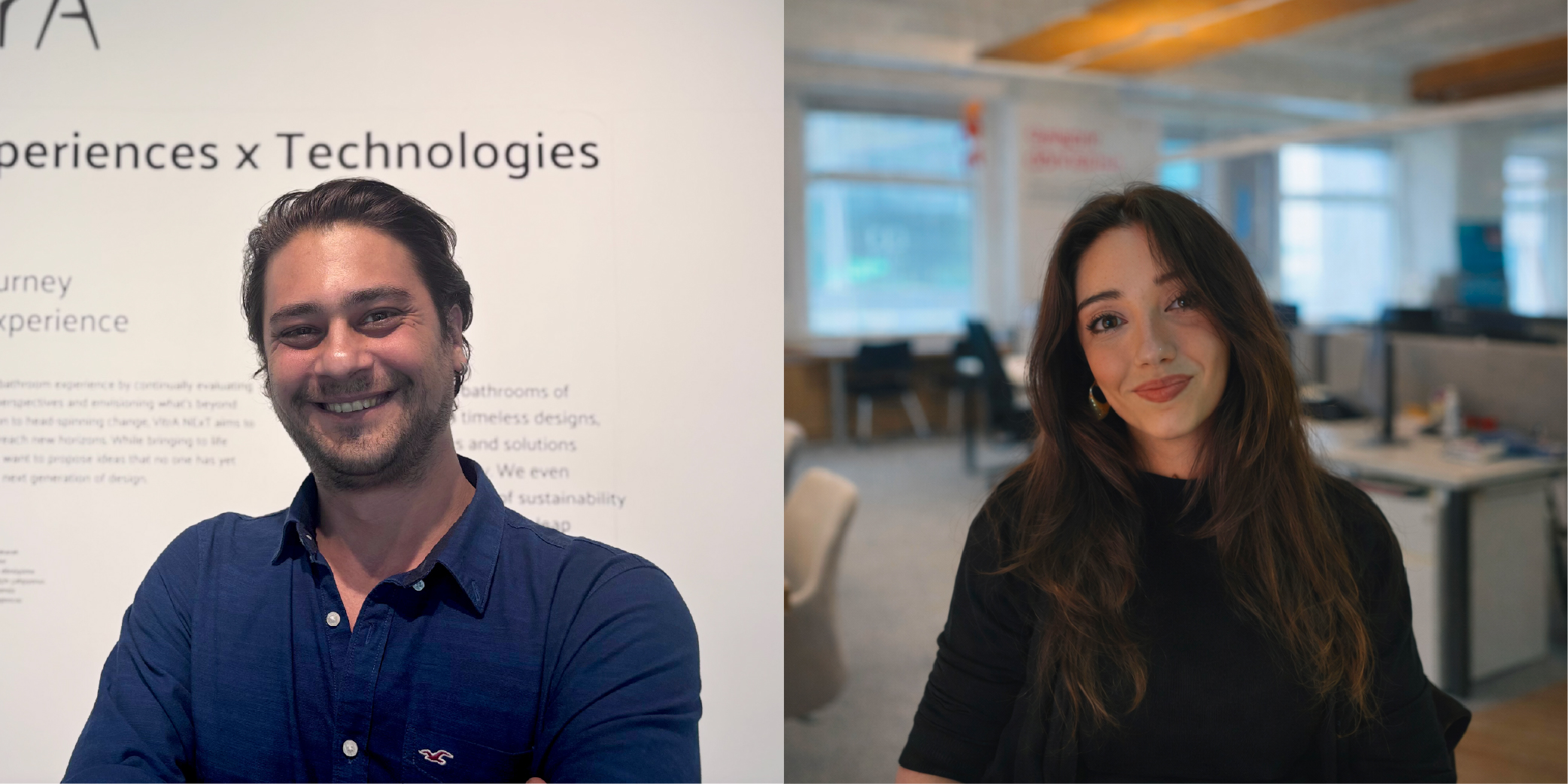
This new approach shaped by the Business Technologist Program comes to life through the experiences of its graduates. Yılmaz Mert Akın, Digital Production Systems Engineer at Eczacıbaşı Building Products, and Berfin Yıldız, Senior Organizational Development Specialist at Eczacıbaşı Pharmaceutical Marketing, answered our questions.
How did you approach technology before the program, and how would you describe your perspective today?
Yılmaz Mert Akın:
Even before the program, I had an active relationship with technology. I was working on data analysis, automation and visualization with Python, while focusing on identifying digital transformation opportunities in business processes. I felt particularly confident in building data driven decision support mechanisms and saw technology as an important force that could influence business outcomes.
Through the program, I realized that I needed to deepen this perspective further. I saw that I could create much greater value by connecting my technical capabilities more strongly with business needs.
Today, I can define this perspective in a more conscious and systematic way. I can analyze more clearly the strategic impact of reducing repetitive work and simplifying processes, and position technology investments together with the business value they create. The program helped me enrich my existing capabilities with the perspectives of different disciplines. I learned to approach problems not only by producing technical solutions, but by building sustainable, scalable structures that support organizational transformation. I now view technology through a more holistic perspective that brings together technical depth and business impact.
Berfin Yıldız:
Before the program, I cared about looking at my work through a technology focused lens. I mostly approached processes through questions such as how we could automate manual work, reduce operational workload and build a more efficient flow. Digitalization and automation were my main motivations.
After the program, my perspective expanded. My focus is no longer limited to automating manual processes. It now also includes structuring data correctly, making sense of it and generating forward looking insights through predictive models.
I have started to see technology not only as a tool for efficiency, but as a strategic field that creates value from data and strengthens decision making processes.
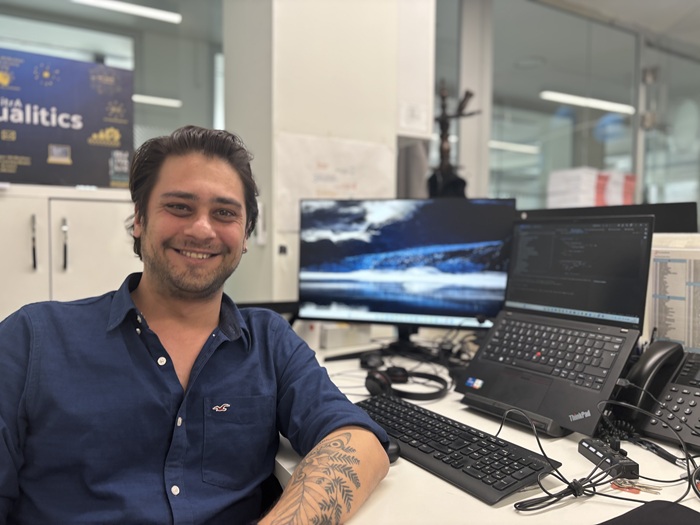
Yılmaz Mert Akın: “The program helped me enrich my existing capabilities with the perspectives of different disciplines.”
What was the starting point of the project you developed, and what need did it address in your work?
Yılmaz Mert Akın:
The starting point of my project was the desire to better understand the impact of variability in the number of products entering the glazing line on the production flow, and to improve planning accordingly. I see increasing the predictability of kiln exit times and quality results as a critical opportunity area for managing the operation in a more balanced and controlled way.
My main motivation was to question the existing process and move planning and resource utilization toward a more optimized structure. I aimed to develop a data driven approach, particularly to place shift planning on a more predictable foundation.
Within this scope, the project aimed to contribute to planning optimization through a forecasting study on kiln exit times, based on the number of products entering glazing. The development process not only improved my modeling capabilities, but also helped me gain insights into how operational improvement opportunities can be identified in the field and how process tracking can be strengthened.
Berfin Yıldız:
The main starting point of my project was the need to transform manual and unstructured data into a systematic structure. Our flows and forms in performance improvement processes were largely manual. Some data was kept in emails, some in physical notes or in different files. This led to both time loss and data integrity issues.
With the system developed, the entire process was moved into a digital structure, and data could be collected in a consolidated way. This not only created operational order, but also established a solid and clean database that can be used for analysis, reporting and even forecasting studies. As a result, the process became more measurable and sustainable.
.png)
Berfin Yıldız: “I have started to see technology not only as a tool for efficiency, but as a strategic field that creates value from data and strengthens decision making processes.”
What changes did the program create in your daily way of working, problem solving approach or self confidence?
Yılmaz Mert Akın:
The program created significant awareness in my daily way of working and problem solving approach. In particular, I saw more clearly how much time and energy repetitive tasks consume within an organization. Although I had worked on automation projects before, seeing the projects of participants from different teams and working with them helped me better understand how the need for digitalization takes shape in the field. I realized that every team, in fact, faces a similar problem: losing time to manual, repetitive and low value added work.
This awareness shifted my priority in problem solving toward the question, “How can we do this in a smarter and more sustainable way?” My motivation to automate repetitive processes and make data more visible became stronger. I saw that I could reach more people through simple Python applications and Power BI dashboards that I developed for my own work processes. This gave me confidence not only technically, but also in sharing knowledge, and created a motivation to become an internal trainer.
Berfin Yıldız:
The program created a clear transformation in my daily way of working and problem solving approach. Before the program, I was actively involved in low code development processes and also designed database structures while developing applications. I was building systems that worked according to needs, but my approach was mainly focused on creating a functionally correct structure.
After the training, my perspective on data became deeper and more analytical. I can now structure the relationships between different data tables more accurately and design data flows from end to end with greater awareness. I gained significant awareness in building scalable and sustainable data structures. In addition, gaining the discipline to design systems end to end has reduced the need for external consultants in many areas and enabled me to act more independently and confidently.