
Photographs document the past while carrying the spirit of an era, the rhythms of everyday life, and traces of social transformation into the present. In Türkiye, photographic archives have taken shape over many years through the contributions of institutions, collectors, and individual initiatives, creating a rich body of material. Yet preserving this legacy, making it accessible, and systematically integrating it into research processes still requires continuity and a shared infrastructure.
The Bülent Eczacıbaşı Foundation Center for Photographic Studies (BEVFAM) was established in response to this need. Created to conserve photographic archives that may be at risk, digitize them, and make them accessible to researchers, the Center approaches photography as a field of social, cultural, and historical memory and research. Operating within the Istanbul Museum of Modern Art while maintaining an autonomous structure, BEVFAM aims to make a broad visual heritage visible and accessible, ranging from artists and press photographers to amateur archives and neighborhood photography studios.
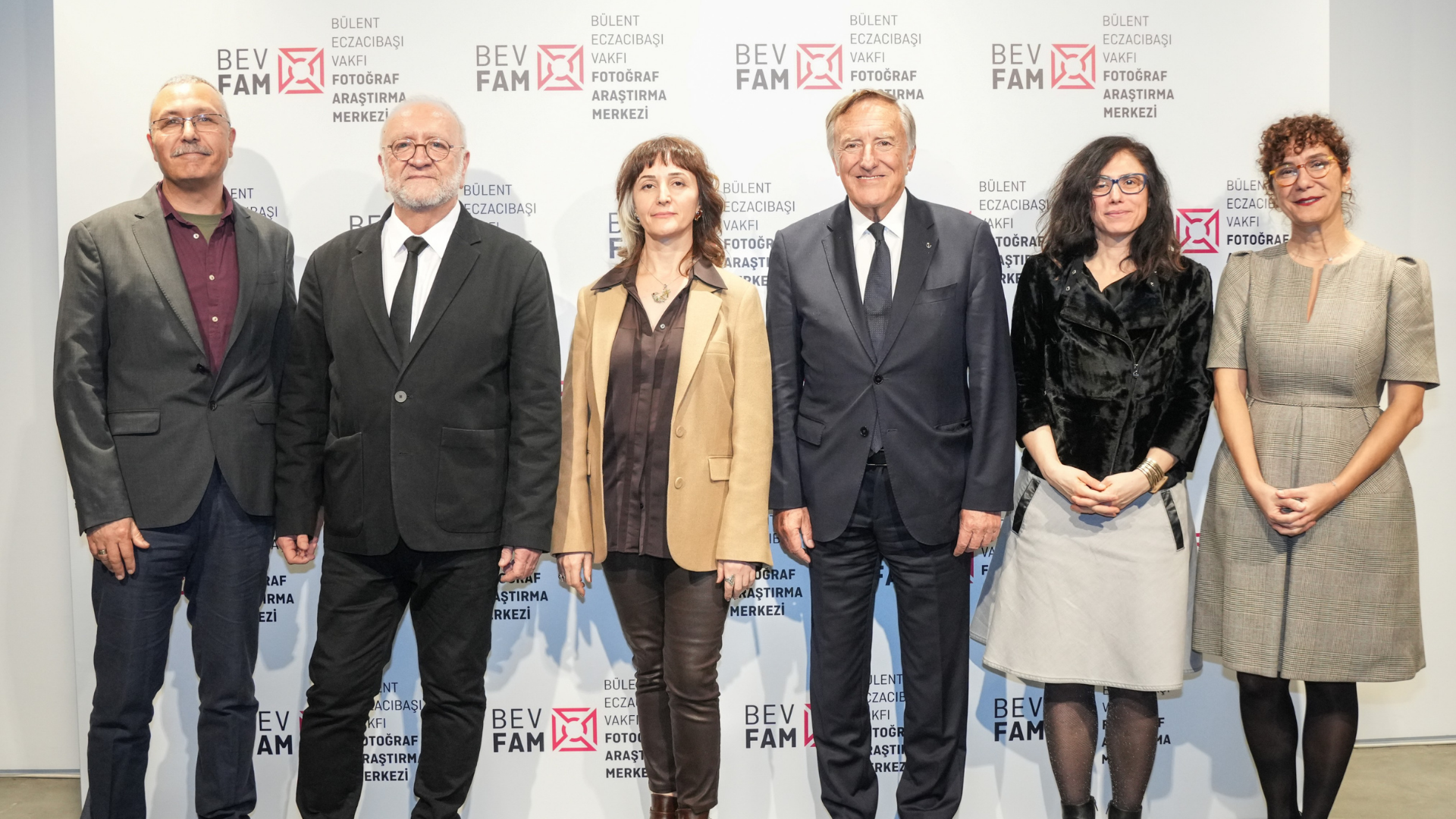
We spoke with BEVFAM Founding Chairperson Bülent Eczacıbaşı and Project Advisor Orhan Cem Çetin about the story behind the Center and the research ecosystem it aims to build.
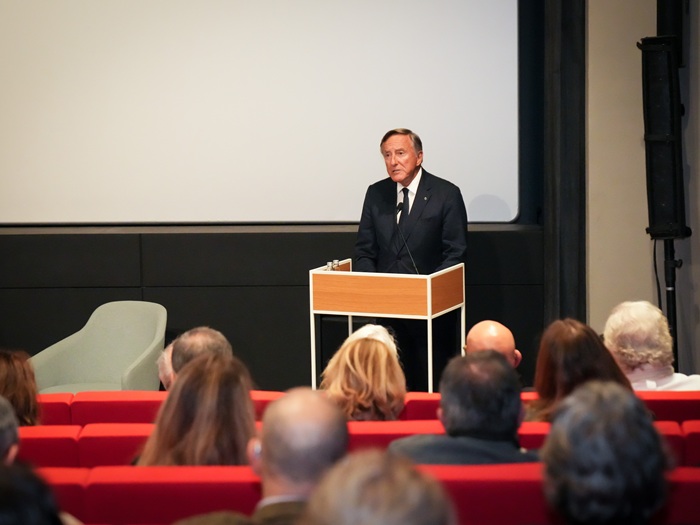
Bülent Eczacıbaşı: “We want these archives to serve as a source of inspiration for new research and creative work for a broad range of users, from historians and social scientists to artists and students. Enabling younger generations to engage with this visual heritage, question it, and reinterpret it is also among the Center’s core responsibilities.”
Photographic archiving in Türkiye has developed over many years through the contributions of different actors. What need led you to establish BEVFAM? How do you position BEVFAM as a field for research
Bülent Eczacıbaşı: Photography arrived in these lands shortly after its invention and became an integral part of everyday life, the public sphere, and the historical record. Over time, major studios, public institutions, media organizations, artists, and individuals contributed to the creation of a rich visual archive that today shapes our collective memory. Yet a significant part of this body of material could not be preserved under appropriate conditions for many years, leaving it at risk of dispersal, damage, or irreversible loss.
This situation also highlighted the need to establish a more lasting and secure connection between the past and the future. The Bülent Eczacıbaşı Foundation Center for Photographic Studies, which we established in 2023 in response to this need, has a fundamental purpose: to identify photographic archives in Türkiye that hold significant cultural value yet require protection, preserve them in their entirety, and secure their transmission to future generations.
Photography is one of the most powerful carriers of collective memory, beyond being a means of individual expression. The inadequate documentation of photographic production, its failure to be properly preserved, or its remaining inaccessible are among the key causes of cultural memory loss. In this context, digitizing photographic images, preserving them under appropriate conditions, and making them accessible to the public allow photography to be approached not merely as an aesthetic form of production, but also as an essential resource for research and memory.
At BEVFAM, we aim to preserve personal and institutional archives under conditions that meet international standards, digitize them in high resolution, and ensure their long-term preservation. But our Center’s role goes beyond conserving archives. By making these materials accessible to researchers, academics, and the public, we also aim to transform them into a living source of information.
We want these archives to serve as a source of inspiration for new research and creative work for a broad range of users, from historians and social scientists to artists and students. Enabling younger generations to engage with this visual heritage, question it, and reinterpret it is also among the Center’s core responsibilities.
Our Center for Photographic Studies maintains an autonomous structure in terms of its governance and operations. While operating within the Istanbul Museum of Modern Art, it also benefits from the museum’s more than 20 years of experience in conservation and exhibition. This structure enables BEVFAM to continue its work with a long-term, sustainable, and reliable approach to archival practice.
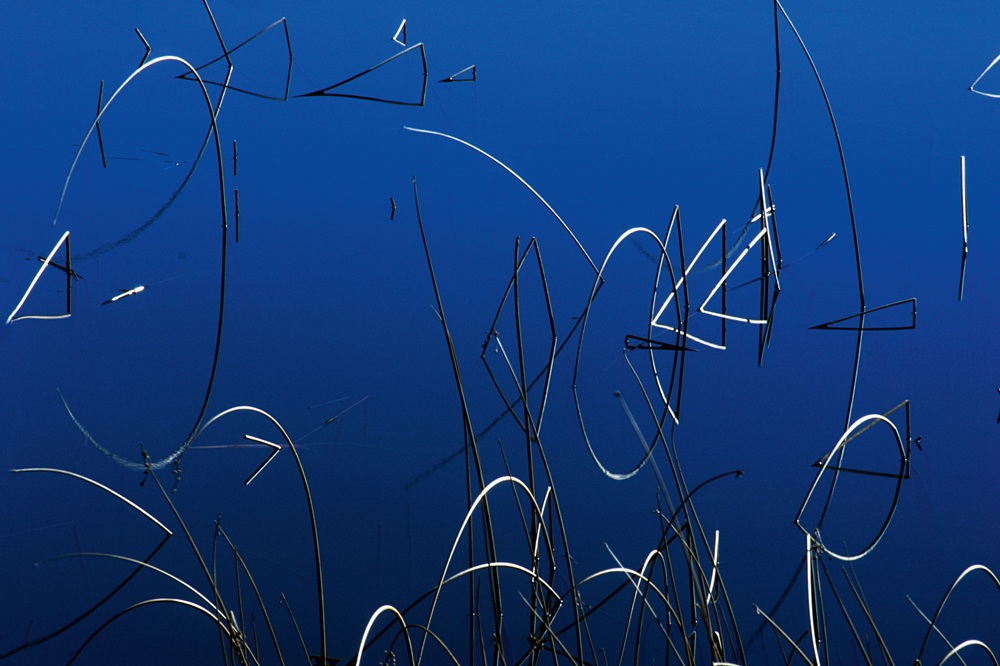
From the BEVFAM archive
Nusret Nurdan Eren
Lake Abant
Bolu
y. 1980 / c. 1980
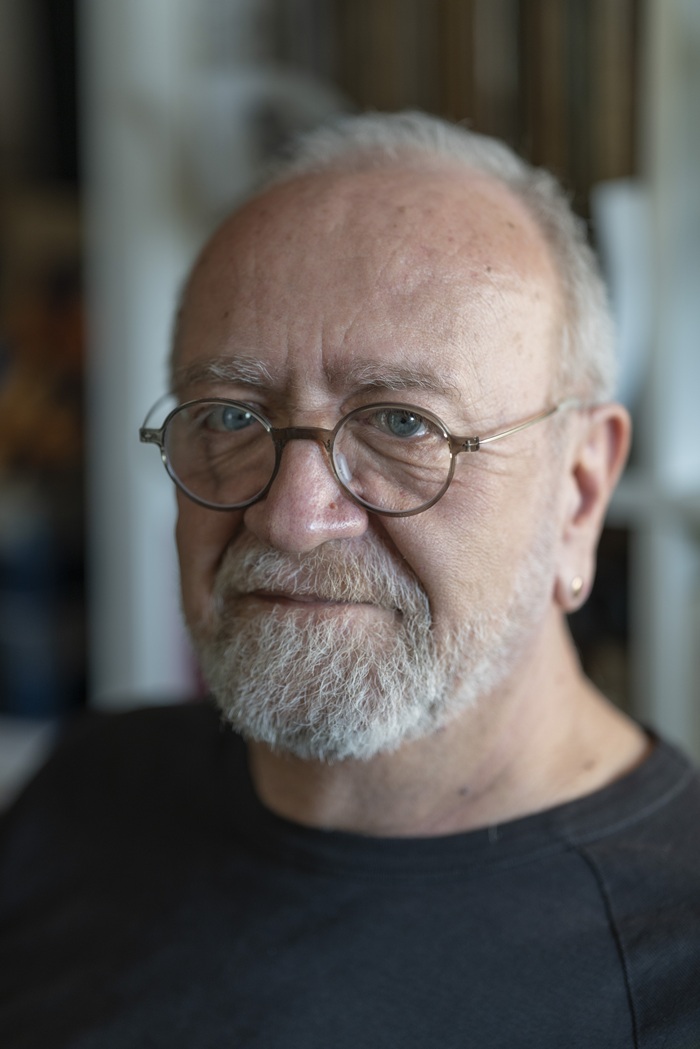
Orhan Cem Çetin: “Photography is, of course, at the heart of what we do, but we aim for BEVFAM to become an inspiring platform for artists, academics, and researchers working across all fields.”
Could you tell us how the idea for BEVFAM took shape?
Orhan Cem Çetin: In the early months of 2022, when I took on the editorship of the retrospective books in the Eczacıbaşı Photographers Series, I had a number of conversations with Mr. Bülent Eczacıbaşı. During these discussions, he spoke about an idea he had been considering for some time: launching an initiative to preserve valuable archives at risk of being lost and make them accessible to the public.
I accepted this historic responsibility with great enthusiasm and pride. We began developing the idea on paper, discussing in detail the Center’s objectives, structure, team, technical infrastructure, and physical space. Architectural photographer Cemal Emden, who had gained experience in this field through the archive of his father, Selçuk Emden, and Bülent Erkmen, with whom we worked on the book project and who supported us at every stage, also joined the preliminary work.
We then presented the idea to the Istanbul Modern management and further developed the project together with Demet Yıldız Dinçer, curator and manager of the museum’s Photography Department. It was ultimately decided that the unit would be called the Center for Photographic Studies and operate under the Bülent Eczacıbaşı Foundation, while being located within Istanbul Modern and benefiting from the museum’s resources.
On October 1, 2023, I arrived at the museum and walked alone into the room that had been allocated to us. Over the following two years, our team took shape, our equipment arrived, we received our first archives, and our website and archive management software were developed. We also studied the working standards of institutions active in visual archive management both in Türkiye and abroad, adapting relevant practices to our own structure. Following two years of very intensive work, we officially introduced BEVFAM to the world on December 1, 2025.
We have a small team carrying out a very substantial undertaking. Alongside Demet Yıldız Dinçer and myself, the team includes the Center’s Manager Duygu Pata Akçaylı, Digital Content Officer Zeynep Eda Gönen, and Technical Specialist Gizem Çelik. We also work closely with an advisory board comprising Dr. Özge B. Calafato from the Department of Cultural Analysis at the University of Amsterdam, Cemal Emden, Bülent Erkmen, Assoc. Prof. Dr. Ahmet Ersoy from the Department of History at Boğaziçi University, and Assoc. Prof. Dr. Gamze Toksoy from the Department of Sociology at Mimar Sinan Fine Arts University. Renowned press photographer Ercan Arslan also supports us as a field advisor.
Naturally, the Istanbul Modern photography collection and the İKSV archive also became part of the conversation. Over time, we will make the rich photographic archives of both institutions publicly accessible through BEVFAM’s infrastructure. Initial selections featuring photographs by Othmar Pferschy and Yılmaz Kaini from the Istanbul Modern collection are already available to view.
.jpg)
From the BEVFAM archive
Tuğrul Çakar
Adıyaman
1982
The Center will be more than a photographic archive; it will be a living space for discovery for social scientists, artists, and researchers. How do you envision this structure contributing to the research ecosystem?
Orhan Cem Çetin: The archives we are seeking to bring into BEVFAM do not belong only to artists. Materials from amateur photographers, press photographers, neighborhood studios, and other sources are equally valuable to us. Our aim is to shed light on the past and to create a resource for social scientists, historians, and researchers across disciplines, as much as for active photographers, if not even more so.
That is why we have developed a database structure that complies with international standards. We study the standardized tagging and citation practices used by larger and longer-established archives around the world and adapt them to our own needs.
Now that BEVFAM has been publicly introduced and our website is open to visitors, we expect our relationships with cultural and arts institutions around the world to deepen. The existing international network of Istanbul Modern’s Photography Department will play an important role in this process. Our goals include developing collaborative projects as well as organizing workshops, traveling exhibitions, and publications.
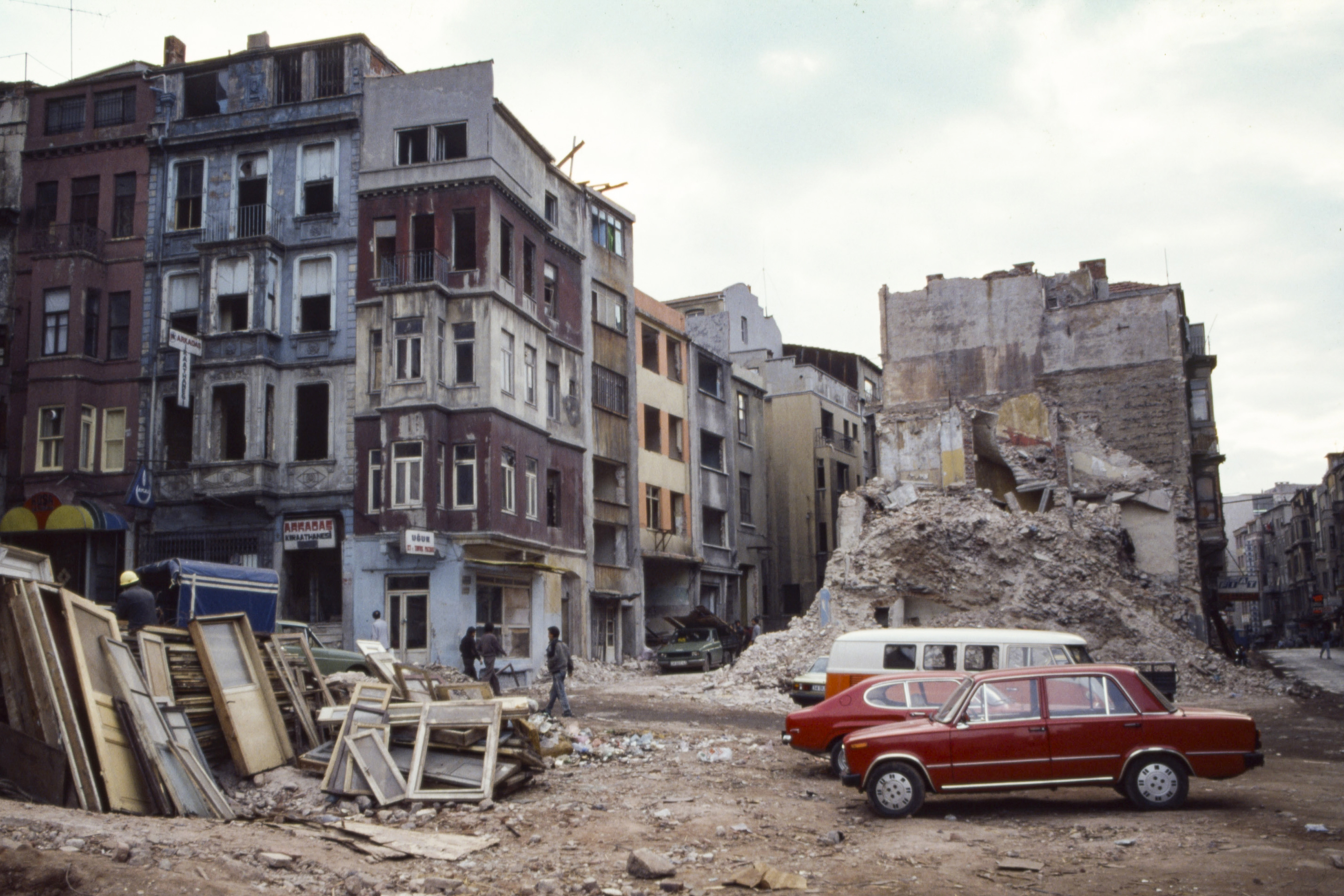
From the BEVFAM archive
Sinan Turan
Tarlabaşı demolition
İstanbul
1986
What cultural, historical, and artistic framework do you consider when determining which materials will be accepted into the archive?
Orhan Cem Çetin: This field was neglected in Türkiye for many years and, as Mr. Bülent Eczacıbaşı also noted, some highly valuable archives that were poorly preserved and at risk have already suffered irreversible losses, with critically important photographs disappearing altogether. Very few institutions have taken responsibility in this area. In short, there is a real sense of urgency.
In this context, we do not want to be overly selective or thematic, at least for now. Our current criterion is quite simple: we focus on archives of significant cultural value that are in need of preservation. Cultural value is a broad concept. Our archive may include a wide range of approaches, from artistic practices and documentation focused on cities, nature, and archaeology to social documentary photography, everyday life, personal and commemorative photographs. All of these can be meaningful for researchers.
For the time being, our focus is solely on photographs relating to Türkiye. Naturally, the photographers featured in the retrospective books of the Eczacıbaşı Photographers Series are among the first names we approach. For example, Nusret Nurdan Eren’s complete archive and Gülnur Sözmen’s analog archive have already become part of BEVFAM.
Looking ahead, what role do you hope the Center will play within the photographic community in Türkiye and internationally? What is its long-term vision?
Orhan Cem Çetin: Because the word “photography” appears in the Center’s name, it may be assumed that this initiative was created primarily with photographers in mind. Photography is, of course, at the heart of what we do, but we aim for BEVFAM to become an inspiring platform for artists, academics, and researchers working across all fields.
An archive is, by its nature, a passive entity. We want to create the conditions for a living ecosystem to grow around and through it. We intend to play an active role by maintaining close relationships with photographers across Türkiye, including those still waiting to be discovered, artists both within and beyond Istanbul Modern’s existing network, academic communities, independent researchers, other arts institutions, and international partners.
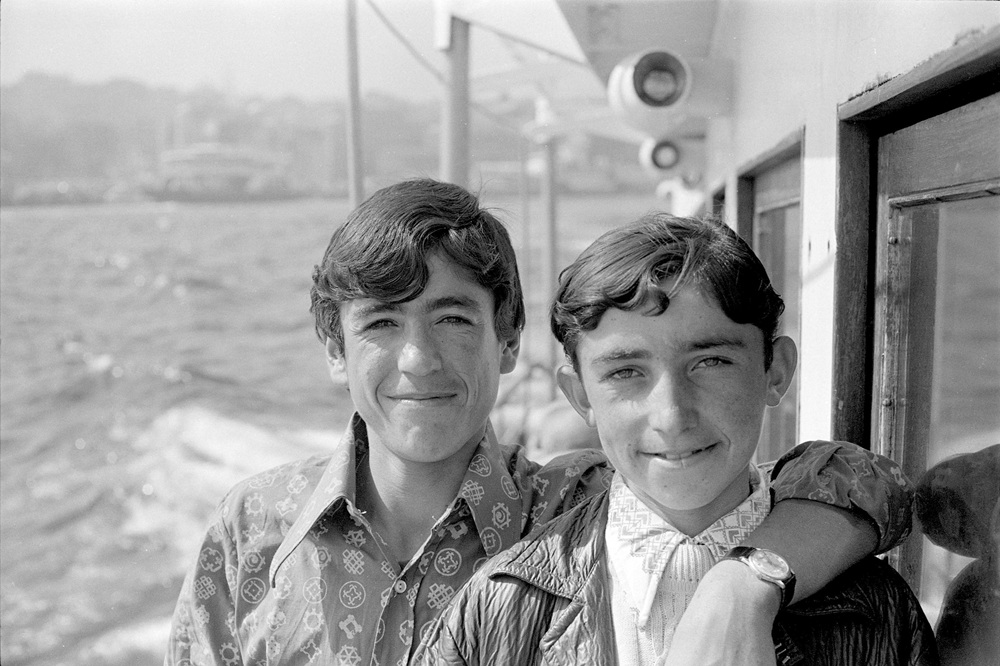
From the BEVFAM archive
Robert John Marshall
İstanbul
1973