

In institutions and organizations, innovation is not merely about methods or tools. Projects that are successfully brought to life or those that stall along the way are often shaped by internal dynamics, team structures, and leadership approaches. For this reason, understanding innovation requires taking a closer look at the human behaviors and organizational reflexes behind these processes.
Tuğba Uçar Demir, Innovation Manager at Eczacıbaşı Holding, shares her insights with the Eczacıbaşı Life Blog on how internal innovation begins, how it evolves, and under what conditions it becomes sustainable.
In recent years, I have had the opportunity to observe innovation processes across different sectors. One realization has become increasingly clear to me: innovation rarely begins loudly. It does not start only with the generation of an idea, but with the intention behind that idea. Yet that intention is not always visible. Sometimes it is voiced after a meeting, before a formal proposal is ever presented. Sometimes it surfaces not in official presentations but in email exchanges or in a brief conversation in the hallway. The innovation process begins quietly, and within that silence it either grows or fades away.
When we look at the people who initiate or sustain innovation within organizations, we see that they act independently of title, position, or status. They are often quiet, observant individuals with strong intuition and a deep search for meaning. They are driven by intrinsic motivation. It is not possible to define them through engagement surveys or measurable KPIs. More often than not, these individuals become the true carriers of innovation within an organization. They take on much of the invisible work: documentation, preparation, the courage to voice an idea for the first time, or the responsibility of supporting someone else’s idea.
In innovation processes, whether a project succeeds or fails is the result of a multilayered equation. Unfortunately, when failure occurs, this equation is often simplified and placed on the shoulders of a few individuals. Those who first voice the idea, take the risk to put it forward, or defend it can find themselves isolated by the end of the process. This isolation does not always happen loudly. It may show itself in speaking less during meetings or choosing not to share the next idea. Yet just as success is collective, so is failure. Team members who believe in the project, those who contribute at every stage, those who support or quietly follow the process, as well as decision makers, implementers, and those in bridging roles all have a share in the outcome.
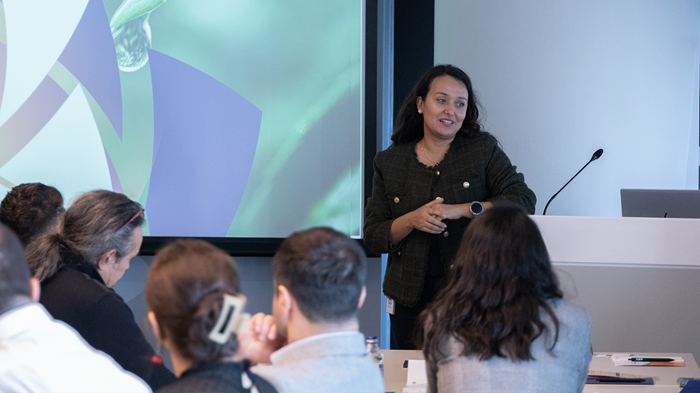
“In innovation processes, whether a project succeeds or fails is the result of a multilayered equation.”
When we talk about success, we need a similarly collective perspective. When a project comes to life, we often focus on questions such as who came up with the idea, who presented it, who sold it. Yet innovation advances not through a few visible roles, but through the collective effort of many people who make the process possible. Those who carry the operational load, those who manage risks in quality and process, those who clear the path through finance and procurement, the IT teams that build the infrastructure, the legal and compliance teams that create a secure foundation, and those who nurture the climate from a people and culture perspective. Celebrating success together does more than increase motivation. It makes invisible contributions visible and reduces the sense of isolation experienced by those who carry the process.
This is where sensitivity comes into play. In organizations, the presence of this muscle is closely linked to the ability of teams to truly understand one another. Those who notice when a colleague grows quieter, who sense hesitation in a presentation, or who intuit why an idea could not be defended are not only practicing empathy. They are also reading the direction of the innovation process more clearly. When this sensitivity muscle develops, organizations become open not only to ideas themselves but also to the potential intention those ideas carry.
Individuals with a high level of sensitivity are often motivated by a desire to act in alignment with their values. It is not only about putting an idea forward. It is equally important that the idea creates impact and finds meaningful resonance. This mindset leads them to connect to the process with greater responsibility and depth. In environments where ideas are not sufficiently heard, efforts are not made visible, or priorities shift rapidly, this deep connection can at times become challenging. Yet despite these difficulties, these individuals continue to produce, contribute, and search for areas of improvement. When we look at this pattern, we see that they do more than generate ideas. They quietly improve the system from within and strengthen the organization’s capacity to build connection and collaborate. Often, one of the biggest obstacles to innovation is not a lack of ideas, but the failure to recognize the loneliness of those who carry them.
Of course, this journey rarely follows a straight line. There are many reasons why innovative ideas may not come to life. Technical infrastructure gaps, shifting priorities, ideas being addressed too early, internal biases, or resource constraints can all play a role. At this stage, one of the most human emotions idea owners experience is becoming deeply attached to their project. Sometimes the belief in a project becomes so strong that it is difficult to see that it is no longer progressing, that it needs to pivot, or that perhaps it would be healthier to let it go. When every path has been tried and no meaningful response is received, learning to say goodbye in a healthy way becomes necessary. Although this farewell is often described as a rational decision, in practice it can be emotionally demanding. Yet this too is part of the process and a skill that develops over time.
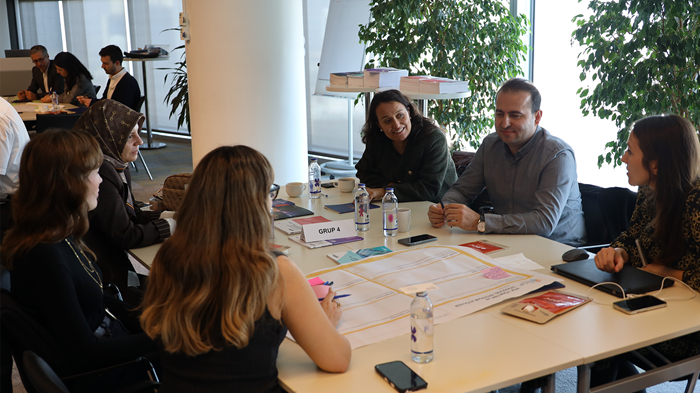
“More often than not, one of the real barriers to innovation is not a lack of ideas, but the failure to recognize the loneliness of those who carry them.”
Recently, I had the opportunity to reflect on the long term outcomes of innovation projects in different organizations that were initially designed to create tangible impact in a short period of time. When I looked at what we experienced within our own community and compared it with similar examples in other organizations, I noticed recurring dynamics. These shared patterns became even clearer when observing how projects launched with similar approaches evolved over time. Even when they began with comparable methods, projects progressed at different speeds and in different directions depending on each organization’s internal dynamics.
· In organizations where internal ownership was strong, cross functional alignment was established, and senior leadership support continued throughout the process, projects matured quickly. Some were fully implemented, while others advanced to the execution stage.
· In other cases, shifting organizational priorities, changes in team structures, or new evaluations related to resource planning altered the trajectory of projects. This, in itself, was part of a natural process frequently seen in innovation initiatives, one that includes learning, experimentation, and renewed decision making.
Looking at projects that moved forward and those that stalled, one insight became more visible to me: the course of an innovation project is not determined solely by the method used. It is true that a method allows us to approach a project more systematically. Yet projects tend to progress much more healthily when three factors come together:
• Focused and capable innovation or project managers
• Strong and continuous senior leadership ownership
• A multidisciplinary team structure that can deepen and evolve
At the center of all these factors, once again, is the human element. Individuals who care deeply about the project, who advocate for the idea, who strive to align it with organizational priorities, who do not give up yet are willing to pivot when necessary. Each example teaches us something different. Some refine the method, some deepen the process, and some leave a mark through their resilience. Quiet successes and invisible contributions perhaps find their deepest meaning in moments like these.

“In innovation, insisting on exploring the problem rather than moving directly to a solution, focusing on understanding rather than fixing, requires a shift in mindset, patience, and leadership.”
On the other hand, in innovation, insisting on exploring the problem rather than moving directly to a solution, focusing on understanding instead of immediately fixing, requires a shift in mindset, patience, and leadership. This transformation becomes possible through structures that support organizational learning. Weekly one on one mentoring sessions, guiding conversations with project leaders, and regular reminders of the method and approach do not only provide knowledge. They also foster morale and a sense of direction.
Another important observation across all these projects and processes is that the carriers of innovation can be found at every level and in every function of the organization. An employee who shares what they learned after returning from a training program, a team member who adapts a practice from another department into their own area, or a specialist who implements a small improvement on their own initiative. All of them are the true carriers of innovation.
When things are not moving forward within an organization, it is often insufficient to explain it solely through technical gaps. In cultures where trust is weak, openness is limited, and failure is punished, innovation struggles to progress. For leaders, some of the most important questions may be these: Am I reading the signals within my team carefully enough? Who is growing quieter? Who is withdrawing? Who has stopped presenting their ideas? Have we celebrated every contribution? What have we learned from both success and failure?
Following these questions offers a powerful starting point for understanding the real dynamics of internal innovation.
An innovation culture is built not only by generating ideas, but by creating the environment, the climate, and the human foundation that can carry those ideas forward. That is why it is important to look before the idea itself, to notice the quiet intentions that give rise to it, the invisible efforts, and the overlooked labor. Real transformation begins not only with successful product launches, but with the care shown to the very first spark of an idea, a feeling, or an intention.
If this article has prompted you to reflect on your own practice, perhaps you do not need to look far to begin.
You might revisit an idea you left unfinished, a project that did not progress, or an initiative you had to pause at some point. This time, instead of asking why it did not work, it may be enough to ask: What small yet innovative change would be meaningful today?
Perhaps it is about noting the needs that challenge you now, the intentions that still excite you, or the ideas that are waiting to be reconsidered. Because a small step you take to meet your own need may unexpectedly open a door for others.
Innovation sometimes advances in exactly this way. Not through grand breakthroughs, but through revisiting an idea from the past with a renewed intention, or simply through the courage to begin again.