To create products or solutions that truly make an impact, it is essential to first identify the right problem and then build the right partnerships to solve it. Innovation is no longer the work of a single team or discipline; it is an ecosystem effort fueled by diverse expertise and experiences. This co-creation approach, which brings together data and on-the-ground insights, technology and know-how, users and design, lays the foundation for sustainable, collective and impact-driven solutions.
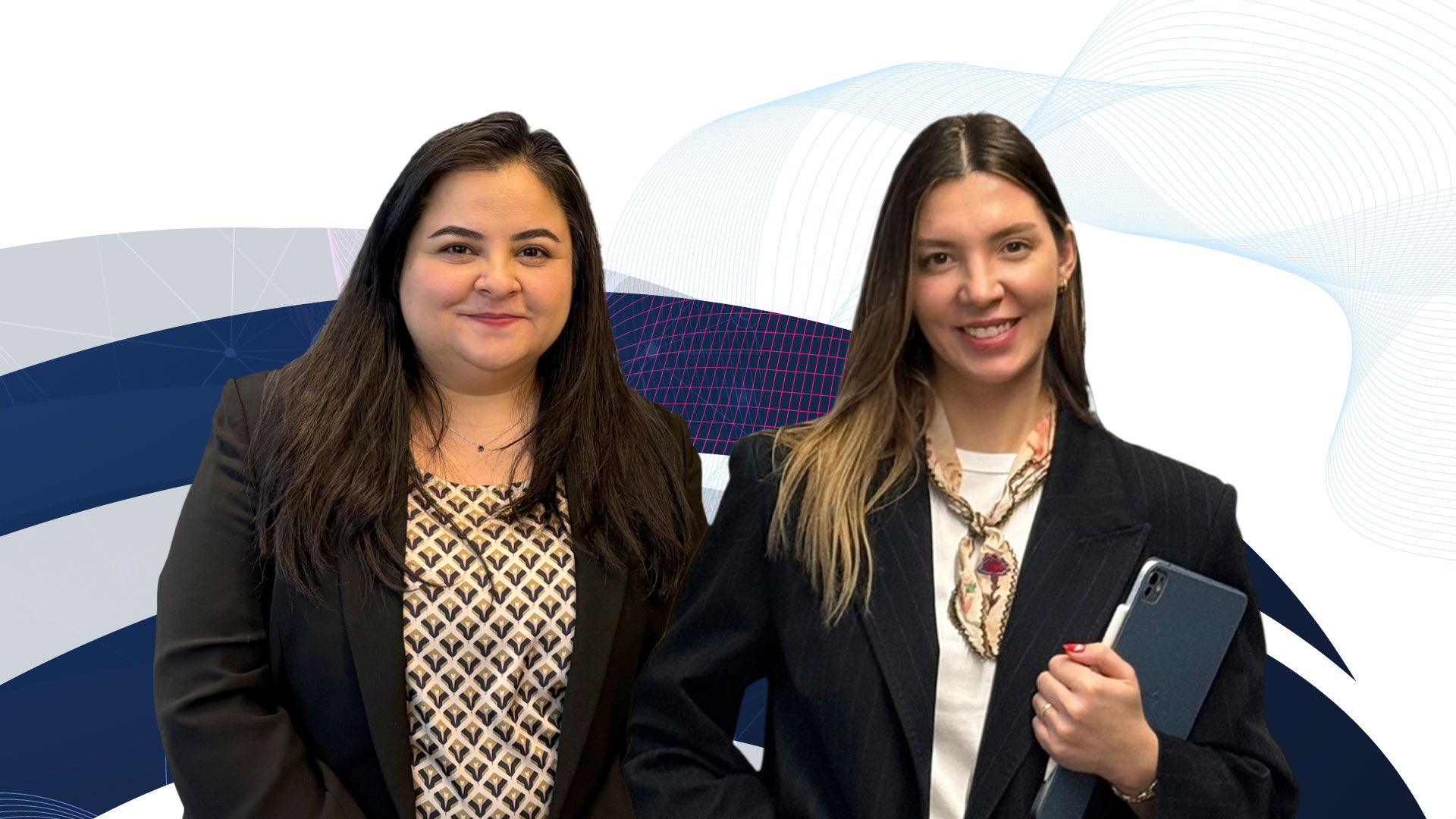
For Eczacıbaşı Life Blog, we spoke with Serenay Akyol Özdemir, Business Development Manager at Eczacıbaşı Pharmaceuticals Marketing, and Burcu Ceren Hallaç, R&D Senior Engineer at Esan, about the strategic thinking behind identifying the right problem, the power of interdisciplinary collaboration, and the co-creation process within an innovation ecosystem.
Every innovation process starts with a problem, but not every problem turns into innovation. What does it mean to define a problem ‘correctly’?
Burcu Ceren Hallaç:
We start our R&D projects with the problem definition phase, and we attach great importance to this step. During this phase, we make a conscious effort to involve people from different disciplines, roles and perspectives. This allows us to examine the problem from multiple angles. In projects carried out through partnerships, we also make sure to dedicate time to defining the problem together with our stakeholders.
We believe that defining a problem correctly requires “going deep into the problem without focusing on the solution.” At times, concentrating solely on the problem and deliberately setting the solution aside can be challenging. In such moments, we remind one another within the team that we are still in the problem-definition phase and that solutions will be evaluated at later stages. This helps us stay focused and move forward on solid ground.
In addition, to define the problem accurately, we revisit every step of the process, consider different perspectives and keep our focus on the actual need. Our past project experiences have shown us how effective this approach can be. For this reason, we allocate as much time as possible to problem definition and continue working on it until we reach a shared understanding of the right formulation.
Serenay Akyol Özdemir:
When we talk about innovation in a generic pharmaceutical company, many people immediately think of new products, new technologies or digital projects. Yet in reality, every innovation journey begins with correctly defining the problem, and what we often observe is this: not every problem is truly a “right problem” worth working on.
In our practice, a “well-defined problem” refers to a need whose owner, context, connection to business objectives and success criteria are all clearly articulated. It requires clarity on who we are serving and for what purpose, under which constraints we are operating, and what outcomes would mean we have succeeded. From our perspective, this is precisely where innovation is triggered.
How do you draw on user insights, data and field knowledge during the problem-definition process?
Serenay Akyol Özdemir: We aim to define problems not through desk-based assumptions, but by systematically combining insights gathered from users, data and the field.
When we refer to “users,” we consider physicians, pharmacists, patients and reimbursement institutions together. Structured interviews with physicians often reveal that the problem does not stem solely from the product itself, but from the mode of use, patient profiles or clinical practice. Feedback from patients, on the other hand, can sometimes shed light on gaps that had previously gone unnoticed.
When these qualitative insights are combined with a strong layer of data analysis, the picture becomes clear much earlier. Market data reveals which therapeutic areas are growing, which products are approaching genericization, and which molecules have high volumes but a limited number of players. Patent analyses allow us to gain a holistic understanding of which parameters of the reference product are protected. Insights from sales and medical teams regarding physicians’ attitudes, combined with input from manufacturing teams on which processes and technologies are feasible with existing facilities and equipment, place the definition on a much more solid technical, commercial and operational foundation.
When all these components come together, what we see is this: the core problem that needs to be solved is often not “discovering a new molecule,” but enabling an existing active ingredient to be used in a way that better fits patients’ real-life conditions. Therefore, the right problem definition takes shape precisely at the intersection of these three elements—user insight, data and field knowledge—and the quality of innovation is often determined less by how “innovative” the developed solution appears, and more by how deeply and holistically the problem was defined at the outset.
Burcu Ceren Hallaç:
Like all departments, the R&D department has been operating for many years and continuously generating data. The data and learnings derived from past studies are extremely valuable to us.
User insight is also of great importance for innovation activities. Since most of our products are positioned in the B2B space, we collect valuable feedback both from our customers and from their end users. This enables us to examine the subject through a much broader lens.
In this process, we first define the needs related to the materials our business partners use in their own production, as well as the challenges they may encounter. We then carry out a second phase of definition for the products that emerge from this production and reach the end user. In both stages, feedback from the field, customer visits and observations made in shared working environments are critically important to us.

Serenay Akyol Özdemir:
“We need to clearly define who we serve and for what purpose, under which constraints we operate, and what we define as ‘success.’ For us, this is exactly where innovation is triggered.”
Today, innovation is often described as a collective rather than an individual process. In your view, what does “creating solutions through the power of the ecosystem” mean?
Burcu Ceren Hallaç:
At Eczacıbaşı, our approach to innovation has always been grounded in collaboration bringing together stakeholders, diverse areas of expertise and different perspectives. This enables teams with varying viewpoints, knowledge bases and experiences to contribute to projects.
As we operate across multiple sectors, we prioritize partnerships that allow us to support our projects with the most relevant expertise in each field. This ecosystem approach both enriches projects and enables each stakeholder to bring their own expertise into the process. When we look at our past experiences, we see that projects carried out in this way often deliver outcomes that are stronger than initially envisioned. Even initiatives that start with a single objective can, over the course of the journey, give rise to new knowledge domains, new collaborations and reputation-building outputs.
Even when projects do not materialize as expected, the power of the ecosystem turns the journey itself into a significant learning space. Moreover, the relationships built and the network of trust that emerges lay the groundwork for entirely different projects in the future.
Serenay Akyol Özdemir:
Today, when we talk about innovation, it is often emphasized that innovation is less an act of individual creativity and more a collective value-creation process. For us, “creating solutions through the power of the ecosystem” does not merely refer to technical collaboration; it represents a holistic working model that encompasses multiple dimensions, including business development, commercial strategy and portfolio management.
At the heart of this approach lies the following question: “In a given therapeutic area, how can we design a sustainable and differentiated business model that delivers higher value to patients and the healthcare system by leveraging the knowledge and capabilities of all stakeholders within the ecosystem?”
To make this more concrete, let’s consider a typical scenario. Suppose there is a need to reposition an existing product in a therapeutic area where competition has intensified. In such a case, decisions made solely through internal resources are often insufficient. From an ecosystem-oriented perspective, the business development team structures the process as follows:
While market and portfolio analyses assess demand dynamics, pricing pressure, reimbursement conditions and the competitive landscape for the relevant molecule, discussions with suppliers provide critical insights into cost structures, quality options and supply continuity. Feedback from distribution channels and pharmacies reveals how the product performs in the field, as well as patient and pharmacist perceptions, making it possible to reconsider the mode of presentation or logistics flow if necessary. When we add treatment-adherence support enabled by digital health solutions, a more holistic value proposition emerges not just “medicine,” but “medicine + service.”
In the final stage, with contributions from reimbursement institutions and health economics experts, the budget impact of the new approach and its contribution to patient outcomes are evaluated. This places the product’s market access strategy on a much stronger foundation.
In this example, innovation does not reside solely in the medicine itself; it emerges through the joint redesign of access, ease of use, supply chain elements and digital support components. Therefore, from a business development perspective, “creating solutions through the power of the ecosystem” means moving beyond decisions taken within the boundaries of a single organization and instead developing more holistic, more resilient and commercially more sustainable business models based on the knowledge and capabilities of all stakeholders.
How do collaborations with different disciplines, suppliers, startups or academia transform problem-solving? Could you share an example from your own processes?
Serenay Akyol Özdemir:
When you work within a single discipline, the subject often remains confined to a narrow technical framework. In contrast, involving different fields ranging from clinical teams to business development, from market access to patents, from manufacturing to supply chain, from digital health solutions to academia both allows us to redefine the problem and significantly expands the range of possible solutions.
For example, while clinical teams bring the patient’s real-life experience to the table, business development and market access assess whether the proposed solution is meaningful under market conditions. Patent and regulatory teams make potential barriers visible from the very beginning, while manufacturing and supply chain teams evaluate whether the idea is truly feasible. Academia and startups introduce new ideas and technologies that do not exist within the organization, creating entirely new perspectives. As a result, what initially appears to be a technical improvement gradually evolves into a more comprehensive value proposition with clinical, economic and operational dimensions.
For this reason, in critical projects, it is far more effective to set out with cross-functional teams from the very beginning rather than adding stakeholders later in the process. When working with external partners, clearly defining roles and boundaries of sharing from the outset also strengthens the “spirit of partnership.”
Another important point is embedding collaboration into the culture. Communicating successes collectively, addressing challenges together, and making projects visible as the product of collective effort rather than of a single department turns this culture into a natural reflex.
Burcu Ceren Hallaç:
In R&D, our core expertise lies in natural resources and enriching them to make them suitable for use in different applications. We conduct our work with a focus on materials science, mineral processing and digital projects.
When colleagues from other departments join during the execution of projects, our problem-solving approach is completely transformed, and much stronger outcomes emerge through new perspectives. The ESANPRIME filtered clay product is one of the best examples of this transformation. Taking customer demands into account, this initiative was carried out by a project team involving different departments following problem-solving techniques training. The diverse perspectives within the team transformed our problem-solving approach through an innovative lens. By incorporating the experience gained from many years of work into the process, product development was completed and an innovative product was brought to life.
To develop innovative solutions, we need not only our own knowledge but also the contributions of different stakeholders such as academia, suppliers and customers. Although everyone has their own way of working, when we come together around a common goal, we see the process move to an entirely different level.
Our experience shows that these collaborations are the most critical factor shaping the course of projects. For example, a study initially planned merely as basic material development can gain new research directions through academic input, while feedback from customers increases the solution’s alignment with real-world usage conditions. Even if a project does not directly result in an outcome, the accumulated knowledge is added to institutional memory and can be revisited at the right time.
In another example, the process can take us in a completely different direction. A study that begins as product development can turn into a deeper understanding of the equipment used during the project and the development of new methods specific to that equipment. These new methods can later become the starting point for other projects.
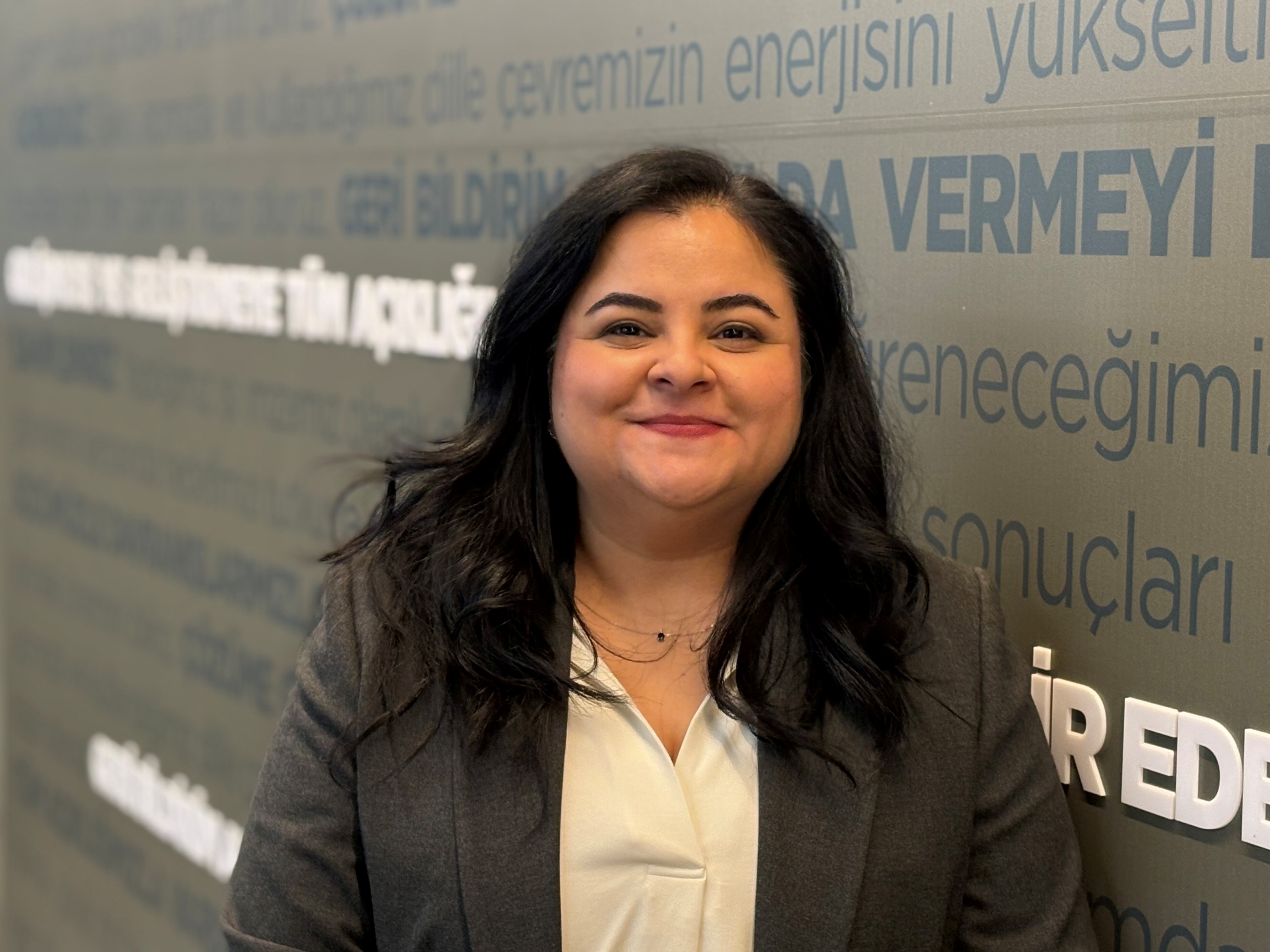
Burcu Ceren Hallaç: “Although everyone has their own way of working, when we come together around a common purpose, we see the process move to an entirely different level.”
When developing solutions together within an ecosystem, how do you strike a balance between “competition” and “creating shared value”?
Burcu Ceren Hallaç:
At Eczacıbaşı, our innovation narrative is centered around “developing new solutions that transform everyday life habits for the benefit of everyone.” As this statement suggests, we place equal emphasis not only on the value created, but also on ensuring that this value benefits all stakeholders.
Within a project ecosystem, departments within the organization can at times find themselves in competition with one another. While this competition can sometimes be motivating, it can also be challenging for teams. In certain cases, teams may feel demotivated when roles are not clearly defined or when they are not sufficiently involved in processes. In such situations, project managers and sponsors step in to help restore balance.
I believe another critical point here is that when success is celebrated, recognition should not be limited only to those who delivered the final outcome, but should also extend to teams that actively included one another in the process.
Without losing sight of the fact that one of the core purposes of bringing ecosystems together is to create shared benefit, I think it is essential to remind everyone that success can be possible for all. Only in this way, I believe, can projects be carried forward more confidently through the power of the ecosystem.
Serenay Akyol Özdemir:
In highly multidisciplinary sectors such as pharmaceuticals, teams across R&D, regulatory affairs, patents, business development, manufacturing, quality, marketing and sales each have their own objectives, timelines and pressures. This naturally gives rise to a healthy sense of competition between teams. I do not see this as a conflict that must be eliminated altogether; rather, when properly framed, it represents a highly valuable space for growth.
When seeking to balance inter-team “competition” with the instinct to “succeed together,” we tend to think across three levels. The first is goal architecture. If each team is measured solely against its own functional objectives, the natural reflex becomes “protect my own targets first.” By contrast, in critical innovation projects, when teams are evaluated not only on functional metrics but also on shared project goals jointly owned by R&D, regulatory, business development, manufacturing and commercial teams, the balance begins to shift.
The second level concerns how competition itself is framed. We try to view competition between teams not as a “zero-sum game,” but as a natural tension between perspectives. Scientific rigor from R&D, commercial realism from business development, operational feasibility from manufacturing, and the field-driven demands of sales and marketing can all act as complementary forces that improve decision quality—provided they come together at the right table, using the right language. The critical point here is not the personalization of debate, but making “different priorities visible” and ultimately reaching alignment at a shared balance point. For this reason, at key decision moments, we encourage teams to participate less as representatives of their own departments and more as “owners of the shared product or solution.”
The third level is recognition and reward. When success stories are told through the lens of a single function—such as “R&D developed this project” or “the sales team took the product to launch”—inter-team competition often takes on a defensive character. In contrast, when critical innovation projects emphasize “we created this together,” both in internal communication and in recognition systems, competition shifts toward a mindset of “let me strengthen my contribution so the collective outcome becomes stronger.” The focus moves away from whose idea came first and toward the total value created as a team.
In summary, we do not seek to suppress competition between internal teams entirely, because it carries dynamism, ownership and speed. However, when managed through clearly defined shared goals, a well-framed culture of discussion and a recognition system that prioritizes collective success, this competition evolves from “inter-departmental friction” into a mechanism for reaching better solutions through the controlled tension of diverse perspectives. Ultimately, the goal is not a scenario in which one team “wins” and another “loses,” but one in which each function brings its expertise to the table and the final outcome reaches a level we can genuinely describe as “achieved together.”
How do artificial intelligence, data analytics and digital tools affect problem definition and solution development processes today?
Burcu Ceren Hallaç:
The article “Corporate Innovation Management in the Age of Artificial Intelligence” written by Dr. Umut Ekmekçi for Eczacıbaşı Life Blog has been a great source of inspiration for me.
These developments have fundamentally changed the flow of many processes today, and we encounter examples of the use of these tools at numerous points. As Umut Hoca highlights in his article, steps that used to take a very long time within innovation processes can now be completed in a much shorter time thanks to AI-supported tools. However, the contribution of employees who can collaborate with these tools in the right way and interpret and further develop their outputs is absolutely critical.
As an R&D team that has been using digital tools for a long time, we have had the opportunity to build up a significant amount of data. Interpreting data such as sample analysis results and application test outcomes, analyzing them accurately and visualizing them properly are extremely important for us. We use specific digital tools for this purpose. In this way, today we are able to use these data sets effectively and efficiently in our projects, both in problem definition and solution development processes.
Serenay Akyol Özdemir:
In my view, artificial intelligence, data analytics and digital tools have moved beyond being “additional technologies” and have become elements that are almost reshaping the way we think in problem definition and solution development processes. Many evaluations that we previously carried out in a more intuitive manner or with limited data can now be conducted in a far more systematic and visible way, based on large and complex data sets. Especially in the pharmaceutical sector, integrating sources such as sales data, market dynamics, pharmacovigilance records, complaints, manufacturing performance indicators, feedback from regulatory processes and even real-world data enables us to define problems much earlier and more clearly.
A similar transformation can be observed on the solution development side. In areas such as formulation optimization, defining process parameters and patient segmentation, artificial intelligence and advanced analytics methods are gradually replacing the traditional trial-and-error approach with a more targeted and more predictive framework.
In summary, artificial intelligence, data analytics and digital tools are not merely technologies that accelerate our processes. Their real impact lies in expanding the data universe we consider when defining problems, and in enabling us to make more predictive and more integrated decisions when developing solutions instead of relying on trial and error. Thanks to this shift, in the pharmaceutical sector we can now discuss not only “what can we do?”, but much more concretely, measurably and transparently, “which problem can we address most meaningfully, for which patient group, within which ecosystem conditions, and with which combination of solutions?”
Looking ahead to the future of innovation, how realistic do you think it is for organizations to become “continuously learning ecosystems”?
Serenay Akyol Özdemir:
At first glance, the term “continuously learning ecosystem” may sound ambitious. However, especially in knowledge-based and regulation-driven sectors like ours, it is becoming a prerequisite for survival in the medium to long term. That said, it is important to acknowledge that this is not a transformation that can be achieved quickly through a single technology investment or a one-off organizational revision. To evolve into learning structures, a foundational layer is required first: an infrastructure where data is integrated, accessible and meets defined quality standards, rather than being fragmented, incomplete and disconnected. When data is siloed and access is limited, learning inevitably remains incidental and dependent on individuals.
Another critical dimension of this transformation is culture. Genuine learning is not possible without an environment in which employees feel safe to make problems, risks and mistakes visible, and where this openness is seen not as a threat but as a sign of organizational maturity. When this is combined with a broader perspective that can absorb feedback from suppliers, academia and the field, the concept of a “learning organization” begins to evolve into a truly “learning ecosystem.”
From this perspective, it may not be realistic for every organization to reach this point in the short term. However, for organizations that invest in data infrastructure, embed learning loops into their processes, and strengthen a culture of feedback and learning from mistakes, this goal becomes both achievable and increasingly essential as a source of competitive advantage.
Burcu Ceren Hallaç:
I believe continuously learning ecosystems are a very attainable ideal. I also find them highly exciting, especially for people who genuinely enjoy learning new things.
Being part of the right ecosystems is crucial to reaching this ideal. In structures enriched by a culture of trust, respect and inclusion, I believe that the sharing of experience and knowledge will increase. In this way, even in areas where we are not direct experts, we can create value both through what we learn from our stakeholders and what we share with them. It is also clear that choosing the right partners increases the ecosystem’s collective learning capacity.
Beyond this, when the focus shifts not only to outcomes but also to the journey itself, becoming continuously learning and evolving ecosystems becomes inevitable. Although the process can be challenging at times, it is important not to forget how valuable the journey itself is. In many projects, even when we did not achieve direct success, we gained meaningful learnings. We have also seen the benefits of working with the right ecosystems by gaining opportunities to develop new projects.