
.jpg)
Artificial intelligence is increasingly part of the search for solutions to some of the world’s most complex challenges. From the climate crisis to widening social inequalities, the question is no longer whether AI can be transformative, but under what conditions it can create real-world public value.
For Eczacıbaşı Life Blog, we explored this question with Dr. Sedef Akınlı Koçak, Director of Professional Development at the Vector Institute for Artificial Intelligence, and Impact and Sustainability Lead for the Global AI Alliance for Climate Action; and Ceren Zeytinoğlu Atıcı, Co-Founder of Be Node and Project Lead of the same program.
Turkish Informatics Foundation
Founded in 1995 to accelerate Turkey’s transition into an information society, the Turkish Informatics Foundation is a public-interest organization chaired by Faruk Eczacıbaşı, with Eczacıbaşı Group as one of its founding members. It works across areas including digitalization, artificial intelligence, cybersecurity, and sustainable innovation, building bridges between the private sector, government, and academia to help shape Türkiye’s digital future.
Beginning Node
Beginning Node (Be Node) is a next-generation initiative under the Turkish Informatics Foundation, with Eczacıbaşı Group as its founding sponsor. Its mission is to connect technology-based solutions with today’s social and environmental challenges.
Vector Institute for Artificial Intelligence
The Vector Institute is an independent, not-for-profit corporation dedicated to advancing artificial intelligence, excelling in machine learning and deep learning. Vector’s vision is to drive excellence and leadership in Canada’s knowledge, creation, and use of AI to foster economic growth and improve the lives of Canadians. The Vector Institute is funded by the Government of Ontario, the Government of Canada and industry sponsors across Canada.
Global AI Alliance for Climate Action
Co-led by the Vector Institute and Be Node, this global project aims to harness artificial intelligence as a transformative tool for climate action.
Run jointly by the two institutions, the Global AI Alliance for Climate Action aims to use artificial intelligence as a transformative tool for climate solutions.
We see artificial intelligence as having the potential to address complex global challenges such as climate change, healthcare, and inequality. In your view, what conditions, collaborations, and approaches are needed to turn this potential into real-world impact?
Dr. Sedef Akınlı Koçak:
Artificial intelligence holds significant promise in tackling complex global challenges such as climate change, healthcare, energy efficiency, and social inequality. What these challenges share is that none can be solved through a single strategy, institution, or framework. That is precisely why they are often described as “wicked problems.” At the Vector Institute, we explore how emerging technologies can help address these kinds of issues.
I can bring together cross-sector and interdisciplinary data flows and knowledge exchange, helping us anticipate risks, optimize resources, and develop solutions that are more transparent and inclusive. But turning this potential into real impact requires more than technical capability alone. It requires a certain level of ecosystem readiness. In our view, several elements need to come together.
First, there needs to be an open and transparent data ecosystem. What matters here is not just the availability of data, but the ability to share and use it safely and responsibly across institutions and borders. Data becomes meaningful only when it can circulate, connect, and be interpreted collectively, rather than remaining siloed.
Second, strong computational infrastructure is essential. Even the most valuable data cannot translate into meaningful models without the systems needed to process it. High-performance computing, secure data centers, and cloud technologies all play a critical role. Just as important, however, is ensuring that this capacity is not concentrated in only a few geographies, but distributed more broadly so that access and opportunity are not shaped by location alone.
Third, ethical and responsible AI design must be treated as a core requirement, not an afterthought. Technological performance on its own is not enough. We need to continuously ask whether these technologies are fair, inclusive, and genuinely human-centered. Ethics should guide the entire lifecycle of AI systems, not only their outcomes, with a clear focus on reducing bias and maximizing public benefit.
Finally, none of this can be sustained without robust governance and global collaboration. If AI development serves only corporate interests, its broader impact will remain limited. For AI to contribute meaningfully to public value, public institutions, civil society, and academia need to be active participants in shaping priorities and defining guardrails. This is only possible through a multi-stakeholder and inclusive approach to governance.
When these elements align, AI becomes more than a technological capability. It becomes a transformative force in service of the common good.
Ceren Zeytinoğlu Atıcı:
We may be witnessing one of the greatest races in human history. The U.S. and China are in intense competition to develop Artificial General Intelligence (AGI), and the business world is eager to be an influential actor in that race.
But alongside this competition, it is just as important to invest in areas that can genuinely move humanity forward, such as climate action and the fight against inequality. When business leaders direct resources to these domains, they also create the opportunity and motivation for engineers and AI experts to work on issues that matter at a civilizational scale.
A concrete example is Faruk Eczacıbaşı’s support for the Global AI Alliance for Climate Action, developed through the collaboration between Be Node and the Vector Institute. With so many possible investment areas, choosing to focus on climate action is a meaningful signal—and an important step toward steering AI toward public benefit.

Dr. Sedef Akınlı Koçak: “AI can bring together cross-sector and interdisciplinary data flows and knowledge exchange, helping us anticipate risks, optimize resources, and develop solutions that are more transparent and inclusive.”
The climate crisis is one of the toughest tests of both global cooperation and AI’s potential to deliver social impact. Could you tell us more about the Global AI Alliance for Climate Action project carried out in partnership between the Vector Institute and Be Node? First of all, how did you find each other?
Ceren Zeytinoğlu Atıcı:
My first encounter with Dr. Sedef Akınlı Koçak happened quite serendipitously. I was hiking a mountain in Colombia when I met Caroline Wesley, a Canadian researcher. Later, when I was in Toronto, we met up again. Caroline had previously worked at Citizen Lab and had just started at the Vector Institute. I was deeply impressed by the Institute’s mission. I found myself wondering—what does a non-profit AI research center look like? I started digging deeper. Eventually, Caroline said, “There’s a Turkish woman leading at Vector,” and introduced me to Sedef.
Sedef was interested in the project, and in our first meeting I told her about Be Node’s perspective, the principles Faruk Eczacıbaşı has always shared with us, how we view technology, and our desire to carry out international projects in this field.
We came together several times to get to know one another. We met with Faruk Eczacıbaşı, the Be Node team, and other members of our Board. We spent time getting to understand each other. After that, we worked together on a project application and prepared a project draft.
Dr. Sedef Akınlı Koçak:
At the Vector Institute, since 2019 we have been working on multi-purpose, industry-oriented AI projects addressing challenges that include sustainability and the climate crisis. The aim of the energy- and climate-focused industry projects we have carried out with our partners has been to increase the number of example success stories in this field and to raise greater awareness.
At exactly that point, Ceren reaching out to us became an important turning point. Through Be Node, we realized how a civil society initiative in Türkiye could open itself to a global network. In the roughly ten-month period from the project preparation phase to its implementation, we saw how important trust is. Because institutions like ours, which operate on a non-profit basis, receive most of their funding from governments and carry significant responsibilities. For that reason, establishing trust before starting a collaboration was essential.
With Ceren’s vision, Faruk Eczacıbaşı’s support, and the contributions of the other project leaders, we first started a small pilot. Although we were planning a three-year project, we decided to begin with a one-year pilot and move forward with what we learned. This process showed us how critical trust, a shared vision, and dedicating time are.
We also saw that there are many climate-focused NGOs, but that access to AI technologies is not easy for them. Here, Be Node’s network and vision provided strong motivation for us. We had the technical knowledge, while they were strong in identifying the right stakeholders and building global connections. Together, we aligned our strengths.
Ceren Zeytinoğlu Atıcı:
Finally, I can add this. Vector is a highly significant institution, bringing together more than 860 artificial intelligence researchers under one roof. It had tremendous potential, but it did not have the time to build international connections. We approached them with a proposal to bring together the right climate partners. In return, Vector brought in a technical network that we would not have been able to access on our own. In this way, both sides connected two very different networks that would not normally come together.
What ultimately brought us together was not only institutional benefit, but the trust established between the leaders. Not rushing the process, taking the time to get to know and understand one another, proved to be the right approach for building a long-term collaboration.
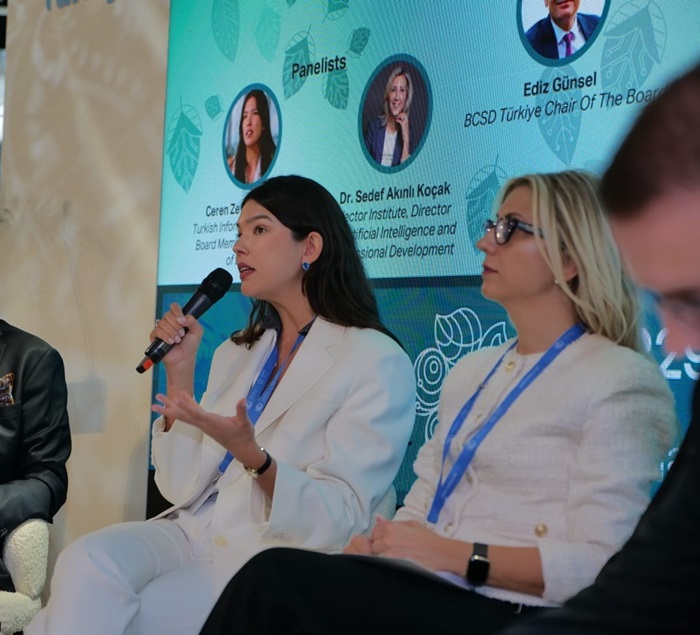
Ceren Zeytinoğlu Atıcı: “If we want to live in peace and prosperity, we must channel the opportunities offered by artificial intelligence toward societal benefit.”
What kind of vision shaped this collaboration at the outset? As the project enters its second year, what outcomes have you achieved, and which goals are you now focusing on? Also, in what ways might this multi-stakeholder model inspire other organizations?
Ceren Zeytinoğlu Atıcı:
We believe that climate technologies will gain far greater importance in the years ahead. AI-based solutions are becoming critical not only in environmental terms, but also across social and economic domains. There is an aspect of this transformation that goes beyond politics, because these are technologies we will inevitably need. If we want to live in peace and prosperity, we must channel the opportunities offered by artificial intelligence toward societal benefit.
Our starting point was to create an incubation space for this transformation. We wanted to bring the best engineers and the best climate experts to the same table and enable them to produce together. These two groups usually operate within separate ecosystems, and it is not easy to establish a shared connection between them. We wanted to open up a space where that connection could be built.
As we enter the second year, we have also secured funding support and the project continues. The methods may evolve, but our vision remains the same. The capacity of artificial intelligence to support adaptation to the climate crisis and to generate solutions will continue to grow year by year. Both Be Node and the Vector Institute want to take a leadership role in this field. That shared vision is what brought us together in the first place.
Dr. Sedef Akınlı Koçak:
I would like to approach this question from two perspectives. First, one of our most critical priorities was enabling data sharing with climate-focused NGOs. This made it possible for our researchers to access local datasets that they had not previously been able to reach. NGOs are very strong at the local level, while technical experts bring strengths in modeling and analysis. When you combine these two capabilities, you can generate truly effective, data-driven solutions.
Although the data is not always open source, it can still be used collaboratively within a relationship built on trust. This, in turn, makes the project more inclusive.
The second dimension was ensuring that the models developed through these partnerships would be shared as open source. In other words, not only the data, but the solution models themselves needed to be accessible. This allows other researchers, in other geographies, to use these models to develop new solutions. Ultimately, our shared goal was to bring together different disciplines and produce data-driven, scalable solutions to the climate crisis.
Looking back after the first year, what did you observe? Did the model work? What were the concrete outcomes and challenges you encountered?
Dr. Sedef Akınlı Koçak:
Our greatest achievement in the first year was being able to establish a structure that brought together different disciplines. We succeeded in bringing AI researchers and climate-focused NGOs into the same projects. To do this, we first conducted a network analysis of climate-oriented civil society organizations worldwide. We examined questions such as who was working with whom and whether they had access to datasets. This analysis revealed a significant gap: most NGOs were either not working with technology or did not have access to it.
Following this analysis, we launched an open call and filtered the applications to identify NGOs that had previously worked with AI or data. We then matched them with technical experts. At a workshop and symposium we held in Istanbul, we introduced these matched teams and selected three pilot projects.
One of the projects progressed quickly and reached the prototype stage. The second moved more slowly because it was waiting for data. But most importantly, none of the NGOs involved withdrew from the process. All of them continued to contribute actively. For us, this was a major success.
Ceren Zeytinoğlu Atıcı:
The AI for Climate Summit held in Istanbul was particularly impactful. At this event, hosted by Faruk Eczacıbaşı, we saw just how strongly everyone involved—from investors to project managers—believed in this work, both professionally and personally.
To be honest, we did not expect such a high level of interest from AI experts. The large number of applications showed us that technical experts are also eager to work in the climate field. This was a very valuable insight for us.
We also do not see this project as a one-off initiative. All of us want to build a collaboration model that can evolve, change form, and expand into different fields.
Dr. Sedef Akınlı Koçak:
At this point, I would especially like to highlight Faruk Eczacıbaşı’s support. Without intervening in the details, he followed the process very closely. He participated both in the event in Istanbul and in the meetings in Toronto. This kind of leadership was extremely important in allowing the two ecosystems to come together with trust.
When it comes to challenges, one of the biggest issues we encountered was data quality. The datasets were often fragmented, not sufficiently clean, or lacking in diversity. This showed us that simply having data is not enough; what is needed is high-quality, meaningful data.
Another challenge was establishing a shared language between researchers and NGOs. While technical experts tend to think in data-driven terms, NGOs operate based on field experience. We realized there was a need for a “translator” role to facilitate communication between these two groups. Had such a coordinator been defined from the outset, the process might have been even more efficient.
In the project’s second year, were there any new partnerships or changes in your approach?
Ceren Zeytinoğlu Atıcı:
As we entered the second year, we held conversations with several different funding organizations. During that period, something very exciting happened from an entirely unexpected direction. Our paths crossed with Canadian geoscientist Barbara Sherwood Lollar. She is well known for her work on groundwater and is the founder of the CIFAR Earth 4D program.
When we told her about the project, she was deeply impressed. She shared that although she is a climate researcher, she often finds it difficult to connect with AI experts. Because we were building exactly this kind of bridge, she said she wanted to dedicate her time and resources to the initiative.
This gave us the opportunity to bring into the project something we had felt was missing in the first year: subject matter experts with deep domain knowledge. The researchers Barbara will guide will enrich the project with work from their respective fields, and we will integrate AI experts into those efforts. Thanks to this collaboration, we were able to move into the second year with a much clearer methodology and a more targeted approach.
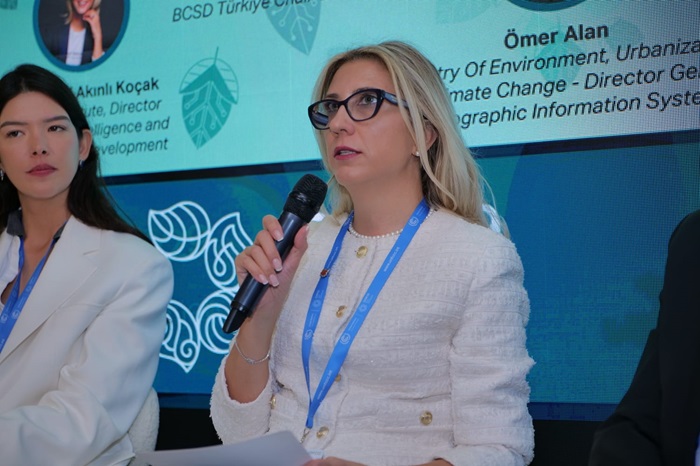
Dr. Sedef Akınlı Koçak: “For us, the most critical aspect of these projects is not only generating solutions but ensuring that others can also benefit from them through open-source systems.”
Examples of AI making a real-world impact are incredibly valuable in helping us understand its societal potential. Could you share a few projects that have truly impressed you, ones that offer tangible solutions?
Dr. Sedef Akınlı Koçak:
One of the climate-focused projects we are most excited about is SegMate. This is an open-source AI toolkit developed at the Vector Institute in collaboration with Vector Platinum sponsor BMO and Vector Gold sponsor TELUS, who helped drive the project forward, as well as other partners. The tool was designed to adapt computer vision techniques to the climate crisis and to generate solutions by monitoring environmental changes in deforestation, agricultural land use, ocean and inshore water bodies, and natural disaster responses. Built on Meta’s Segment Anything Model (SAM), SegMate has been expanded to support a wide range of use cases, including wildfire risk prediction, monitoring agricultural land, and analyzing changes in waterways and habitats.
Through SegMate, it becomes possible to track changes in vegetation and land cover using satellite imagery, enabling early identification of climate risks. This provides a strong data foundation for early warning systems and sustainability strategies.
Another example is our long-term collaboration with the Canadian telecommunications company TELUS. In this project, we developed the Energy Optimization System (EOS) to reduce energy consumption in data centers. Based on model-based reinforcement learning, the system optimizes heating, ventilation, and cooling settings in real time and achieves approximately 12 percent savings in annual electricity consumption. This solution also stands out as TELUS’s first open-source AI project.
For us, the most critical aspect of these projects is not just producing solutions, but ensuring that others can benefit from them through open-source systems. Making these tools accessible is essential if technology is to be directed toward social and environmental benefit.
Ceren Zeytinoğlu Atıcı:
Sedef has shared some excellent examples. I also strongly believe that AI has enormous potential when it comes to democratizing education. One of the best examples is Udemy, founded by Turkish entrepreneur Eren Bali. The platform enables people living in different and often disconnected parts of the world to access educational content and mentoring networks they would otherwise not be able to reach. Artificial intelligence offers a major opportunity not only in climate, but in education as well.
At the Vector Institute, you are also responsible for workforce development and applied AI industry projects. What skills do professionals outside the tech sector need to develop in order to stay relevant and contribute to this transformation in the age of AI?
Dr. Sedef Akınlı Koçak:
In my role at the Vector Institute, where I work on both workforce development and applied AI industry projects, one thing is very clear to me: artificial intelligence is no longer transforming only the way technology teams work. It is reshaping how professionals across all fields do their jobs. For those working outside the technology sector, developing new skills is critical both to avoid falling behind and to actively contribute to solutions.
Three main skill areas stand out in particular. The first is AI literacy. Understanding what AI is, how it works, and which kinds of problems it can solve is essential. Professionals do not need to become AI developers, but they do need to be familiar with core concepts such as model types, how data is processed, and the ethical implications of AI systems. This enables them to engage with AI consciously, ask the right questions, and use these tools responsibly.
The second area is data awareness and interdisciplinary problem solving. Since AI systems are fundamentally data-driven, it is extremely valuable for professionals outside tech to develop data literacy. This includes understanding where data comes from, how it is processed, and what kinds of biases it may contain. At the same time, an interdisciplinary perspective is crucial. From marketing and healthcare to financial systems and sustainability initiatives, the real impact of AI emerges through collaboration across sectors.
The third area is critical thinking, ethical awareness, and governance. AI-driven decisions must be evaluated not only in terms of technical accuracy, but also through their ethical, legal, and societal implications. Professionals need to be aware of issues such as transparency, accountability, and inclusiveness in AI systems. In our work at Vector, we consistently see that the most effective AI solutions emerge from multi-stakeholder models, where technical experts work together with legal professionals, policy makers, sociologists, and climate-focused NGOs.
As for where to begin, I would offer three recommendations to professionals outside the technology field. First, participate in AI literacy trainings and micro-credential programs. Second, get involved in interdisciplinary collaborations, such as applied industry projects, hackathons, or open data initiatives. And third, take an active role in global AI communities, because international experience and knowledge sharing significantly accelerate this transformation.
At the Vector Institute, we are working to advance this transformation by developing applied AI projects together with industry leaders, public institutions, and civil society, while also designing workforce reskilling programs. Our aim is not only to develop technology, but to ensure that it becomes meaningful, inclusive, and focused on societal benefit.
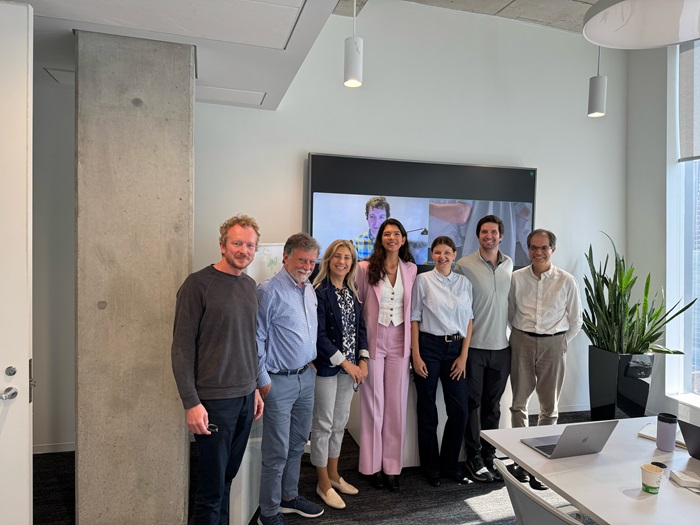
Ceren Zeytinoğlu Atıcı: “I believe that experts who can build bridges between technical networks and human networks, and who can facilitate collaboration and communication between AI and people, will always be valuable in this economy.”
How can civil society actors who are not technology experts develop the kind of literacy needed to understand and contribute to AI? What can be done to ensure that AI does not remain the domain of a narrow elite?
Ceren Zeytinoğlu Atıcı:
At Be Node, we try to address this challenge through education programs, mentorship, and collaboration with psychosocial actors. In the age of artificial intelligence, understanding how the technology works and how to use it effectively is certainly very important. But it is just as critical to invest in the kinds of skills that AI cannot replicate and that humans can bring forward in the strongest way.
We group these skills into three categories. The first is building strong networks and human connections. The second is discovering the power of silence. We need to allow the mind to reset and create space for creativity to emerge. When we are constantly surrounded by algorithms and screens, we risk limiting our creativity and our ability to express ourselves. The third is continuous adaptation. For centuries, humanity experienced very slow rates of growth. Today, we see double-digit changes in data and economic growth almost every month. This pace requires all of us to continuously adapt.
I also believe that experts who can build bridges between technical networks and human networks, and who can facilitate collaboration and communication between AI and people, will always be valuable in this economy. So yes, teaching young people and children how to use AI is very important. But it is equally important to help them develop leadership qualities, communication skills, and the ability to manage teams effectively. I strongly believe that civil society organizations like Be Node have a major role to play in this area.
How do you evaluate Türkiye’s AI ecosystem from a global perspective? How does Türkiye appear from where you stand?
Ceren Zeytinoğlu Atıcı:
Türkiye’s greatest strength, and at the same time its greatest opportunity, is its young population. We are talking about 15 million young people, which represents an enormous potential. This means we need to prepare a large part of this generation for the current technological shift.
However, this cannot be achieved by universities or educational institutions alone. I strongly believe that civil society organizations such as Be Node also have a critical role to play in this process. Today, networks and connections are more important than ever. We need to be able to connect a young person in Elazığ to the technology ecosystem in Istanbul. This is precisely the function of Be Node: identifying young people across Türkiye and integrating them into this ecosystem.
With its young population and geographical position, Türkiye will always be a country that stays connected to global developments. This creates significant value for international projects. For example, in our collaborations with institutions in Canada, Türkiye’s role as a bridge proved to be truly important.
At the same time, Türkiye has begun developing its own large language models and AI solutions. I find these developments very encouraging. The country has institutions with the potential to lead in frontier technologies, and our responsibility is to ensure that the impact and benefits of these technologies reach different segments of society.
On the other hand, Türkiye is also located in a drought-prone region. For this reason, it needs to adopt new technologies much more rapidly. Our goal is to help ensure that once the incubation phase of these projects is complete, the solutions are implemented in Türkiye. As the Turkish Informatics Foundation and Be Node, we are determined to take on this responsibility.
Dr. Sedef Akınlı Koçak:
Türkiye’s AI ecosystem has gained remarkable momentum in recent years. Strategic guidance from the public sector, a growing culture of entrepreneurship, and the strong potential of young researchers all represent significant advantages. The goals outlined in the National Artificial Intelligence Strategy—such as cultivating qualified talent, strengthening the open data ecosystem, and increasing investments in research and development—are important steps in the right direction.
Within this framework, Türkiye’s 2021–2025 National Artificial Intelligence Strategy provides a solid foundation for the country’s AI development, supporting talent attraction, local model development, the establishment of ethical standards, and the inclusion of small and medium-sized enterprises. This foundation has been further strengthened by the draft Artificial Intelligence Law No. 2/2235, which adopts a risk-based regulatory approach aligned with the European Union’s AI Act.
If Türkiye aims to manage AI in line with ethical principles and for the benefit of society, adopting a multi-stakeholder governance approach is essential. By involving not only public institutions, but also academia, the private sector, civil society organizations, and citizen initiatives, AI policies can become more inclusive, transparent, and accountable. Such participation not only strengthens ethical AI efforts, but also encourages regional cooperation, supports sustainable development, and increases Türkiye’s influence in the global AI governance arena.
Universities and research centers can play a central role in this transformation by partnering with startups on projects focused on applied research and innovation.