
In a world defined by uncertainty, leadership is no longer just about decision making. It has become a journey reshaped by the ability to build foresight, stay close to the ground, connect genuinely with people, and prepare organizations for the future.
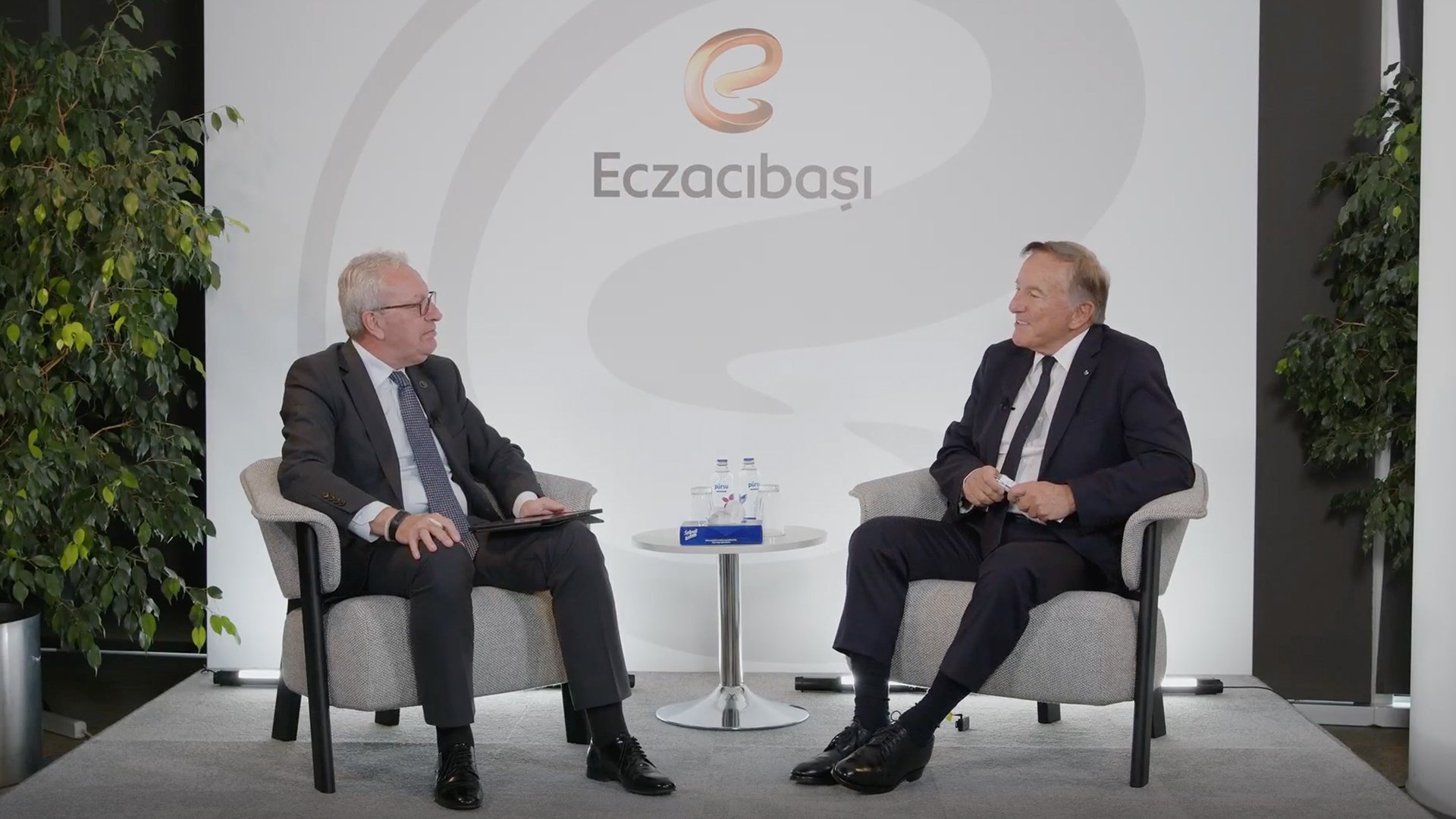
Adnan Bali, Chairperson of the Board of Türkiye İş Bankası, responded to questions from Bülent Eczacıbaşı, Chairperson of the Board of Eczacıbaşı Holding, during the session titled “Leadership in the Age of Uncertainty,” where he joined the Eczacıbaşı Summit as a guest speaker. Touching on the changing needs of the business world, Türkiye’s dynamism, the ethical foundations of leadership, and the importance of a long-term perspective, this wide ranging conversation offers a thoughtful look at contemporary leadership. We have compiled this inspiring exchange for the Eczacıbaşı Life Blog.
Bülent Eczacıbaşı
Uncertainty has become a word we use almost daily. It is, in fact, intrinsic to business life. Without uncertainty, there would be no entrepreneurship, no risk taking, and no profit. Yet in recent years, we have been experiencing uncertainty on an entirely different scale: shifting global power balances, the opportunities and threats brought by artificial intelligence, the climate crisis, and a fundamental transformation of logistics. All of these have pushed uncertainty several levels higher.
In the face of these conditions, what do you see as the most pressing issues when we consider today’s challenges and problems? And in this context, what are the most important responsibilities of a leader today?
Adnan Bali
We are truly living through an extraordinary period. Uncertainty has always existed, but the difference today is this: in the past, uncertainties in specific areas could be balanced by other, more predictable factors. Now we are facing a world in which everything is uncertain at the same time, all at once.
We are also experiencing this in an age of intensified communication. The moment a trend emerges in one place, it manifests itself everywhere. Think back to the neoliberal winds that began blowing in the 1980s: the collapse of the Soviet Union, the fall of the Berlin Wall, the idea of the “global citizen,” and the belief that the world would turn into a single village. It was a great utopia. Today, that utopia has largely turned into a full-blown dystopia.
That said, there is no need to approach this with pessimism. When we look at human history, we see that such periods arrive in waves. Phases of expansion, contraction, and reopening. The cycle has always existed.
In earlier periods, the challenges we faced resembled single dimension problems, like maximization or minimization. Over time, these evolved into optimization problems, no longer defined by a single variable but becoming increasingly complex. Today, however, the picture is so multi-dimensional that it is no longer possible to speak of a single “optimum.” We now have to work with multiple scenarios and continuously recalibrate the roadmaps we develop as we move forward. In this environment, adaptive decision making and governance systems have become critically important.
I believe leaders today have three core responsibilities. The first is current performance: targets, balance sheets, and quarterly results. These still matter, but they are no longer sufficient on their own. The second responsibility is to prepare the organization for the future. This means continuously updating business models, monitoring risks and opportunities, and safeguarding the sustainability of the ecosystem in which the organization operates. The third responsibility is to create lasting value for society and for the world. We cannot move toward the future by relying solely on short term financial outcomes.
On top of all this comes reputation building. This is a process that develops step by step over time. When we look at institutions such as Eczacıbaşı and İşbank, we see that the identities they hold today are the result of accumulation over many years. That is why reputation is a marathon, not a sprint.
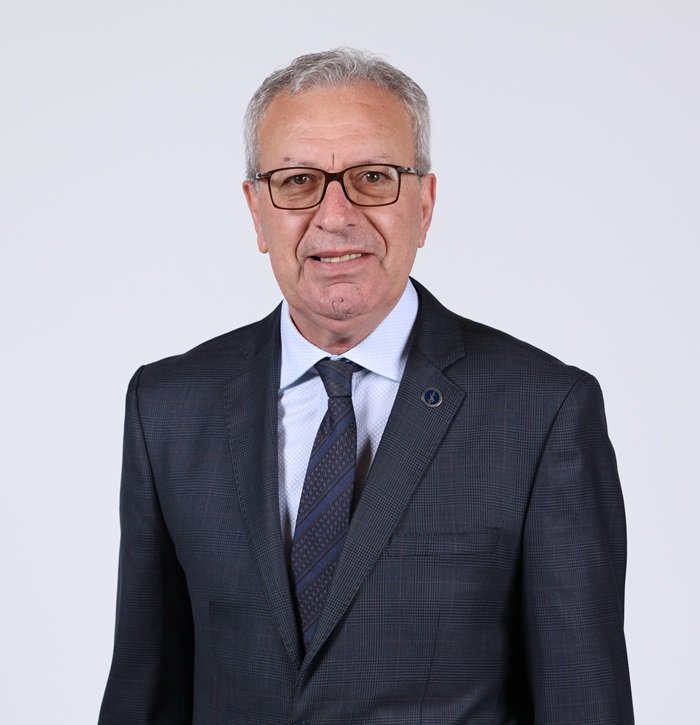
“Every company leader must have the capabilities of a technology company leader.”
I would like to place particular emphasis on the technology dimension. Today, regardless of the sector you operate in, every company is, at its core, a technology company. If an organization fails to fulfill this role effectively, it will inevitably struggle to perform well in its chosen field and suffer a significant loss of strength.
That is why we need to recognize that every company, independent of its line of business, fundamentally contains a technology company within it. And for this very reason, every company leader must possess the capabilities required to lead a technology company.
Alongside all of this, there is another issue I see as critically important: being close to business on the ground. ChatGPT, artificial intelligence, and all learning technologies certainly matter. But without truly understanding how the business operates on the ground, none of it has real meaning. If you are not familiar with the day-to-day realities of the business, if you do not know what is happening at its very core, reports will only ever present you with a delayed version of reality. What truly matters is being able to see and sense what is happening in the engine room of the business before it is reflected anywhere else.
During my years in an active role, I was flying nearly 70,000 miles a year across Anatolia. As a result, in most of the credit files on my desk, I personally visited the production facilities and come to know the business owners behind them. That is an insight no report can ever provide. Which is why I always say: you cannot touch the numbers if you do not touch people.
Employees look to leaders both for performance and for comfort. If the leader is running, everyone runs. If the leader chooses comfort, it is immediately noticeable, and this both legitimizes those who are not pulling their weight and alienates those who are. A leader has no right to complain. A leader must run and transmit that energy to the team.
There is also the issue of earned legitimacy, which I consider extremely important. We all arrive at our positions through certain procedural mechanisms. But I believe what truly matters is moral legitimacy. The relationship between a leader and employee is inherently unequal. The leader receives a larger share of the returns of success; the relationship is asymmetrical by nature. In such a structure, what enables people to work with a leader willingly and wholeheartedly is the desire to contribute voluntarily. One of the most important qualities of leadership is the ability to cultivate this feeling. Because the positive energy created by voluntary commitment is entirely different. It multiplies itself and spreads throughout the fabric of the organization. That is why I see this as a defining element of what I would call truly difference making leadership.
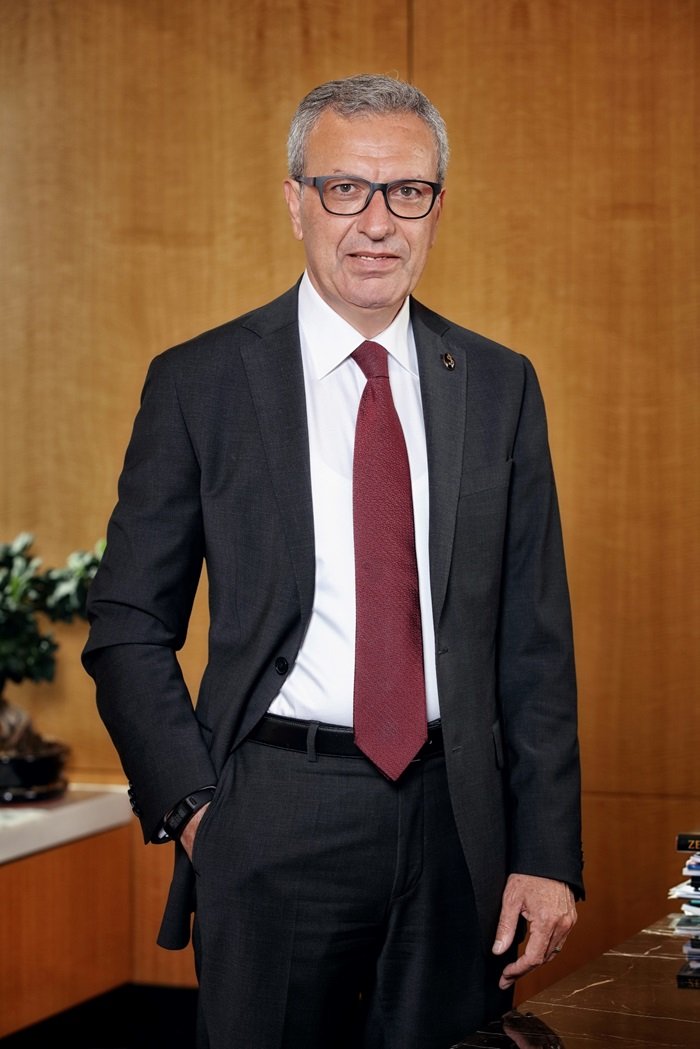
“Do not commit to ventures where costs are certain but revenues are ambiguous. That kind of path will inevitably leave you exposed in a world of probabilities.”
Bülent Eczacıbaşı
Thank you very much, Mr Bali. You touched on several extremely important points.
In essence, what I take from your remarks is this: we operate within a complex web of challenges that are multi-dimensional, layered, and unfolding simultaneously. In parallel, there is a growing need for leaders with diverse backgrounds, broad experience, and a wide range of capabilities. Short term thinking, of course, still has its place. But as you emphasized, what truly matters is the ability to create value over the long term. You also underlined the importance of building reputation.
Another point you raised is that the years during which we held active roles were, in a sense, a fortunate period. I, too, believe the 1980s were highly decisive. It was a time when the paradigm of the free market economy, and even of capitalism itself, was shifting. Those years paved the way for entirely new conditions that opened up the horizon of the business world.
If we move from here to Türkiye… how do you assess the challenges that leaders in Türkiye, in particular, have to contend with? We have very strong attributes, and a remarkable human capital potential in which we place great hope. Yet we also see that we are sometimes affected more than necessary by global fluctuations. Against this backdrop, which issues do you think leaders need to address first?
Adnan Bali
Türkiye is an extremely active and dynamic country, where agendas can change overnight. One layer of the uncertainty we have been discussing is specific to us. Yet this also gives us very important qualities. It keeps us sharp, engaged, and mentally agile. Turkish people tend to get bored with routine, and Turkish executives are no different. When things run too steadily and too smoothly, a sense of unease quickly sets in. We start asking ourselves, “What will happen next? What might come our way?” Because we are a society accustomed to grappling with problems.
We have seen this very clearly during global crises. In Western Europe, when managers were pushed outside their routines, many were caught completely off guard. Their professional lives had largely been shaped by checklists and predefined frameworks. That is not how things work here. We deal with multiple uncertainties at the same time and try to manage them one by one. From the outside, this may seem difficult, but in fact it builds an important capability. It is like navigating a ship through stormy seas. And for that, the crew must be experienced and hardworking as well. I believe our companies are quite capable of keeping their ships afloat amid uncertainty.
From a business perspective, I would particularly emphasize this: in Türkiye, it is just as critical to master the financial side of the business as it is to master the technology side. At times, I see executives speaking only in terms of physical units. Construction professionals talk about square meters, road builders talk about kilometers, and those in the energy sector talk about megawatts. But no one talks about dollars, euros, or Turkish lira. As a banker, you ask a very basic question such as, “What proportion of your revenues do your debts represent?” and the answer might be, “That’s something our finance colleague handles.” This should not be the case. You need to be as fluent in the financial dimension of the business as you are in its technical aspects. Because in the end, what emerges is value creation, and that value is measured through financial performance.
How and where you allocate capital, how you use the resources you generate, and how you manage financial performance are fundamentally important issues. And speaking as a banker, I can say that we encounter gaps in these areas even in companies at very early stages.
For example, making expenditures unrelated to core operations out of working capital is extremely common and often goes unnoticed. Especially when business is going well, this becomes even more invisible.
I also believe that investment decisions, investment scale, and particularly investment timing are critically important in a country like Türkiye. I would like to sum this up with a simple principle: do not commit to ventures where costs are certain but revenues are ambiguous. Because in the end, such choices will inevitably put you in a difficult position in a world governed by probabilities.
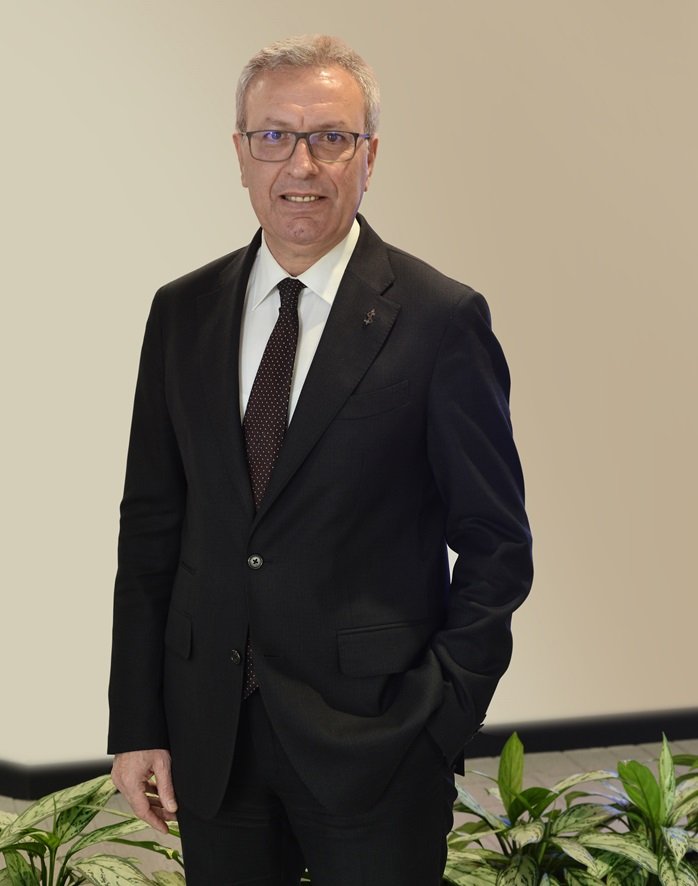
“A leader must be genuine. Because all other behaviors can only truly reach others through that genuineness.”
Bülent Eczacıbaşı
Thank you very much, Mr Bali.
If you allow me, I would like to bring together a few questions I have been curious about.
In conversations like this, I am often asked a familiar question myself: You have spent so many years in business, what mistakes have you made? I do not want to frame it that way, because I do not particularly enjoy answering that question. Not because I shy away from talking about mistakes there have certainly been many, and some may even fall under the category of company secrets. Instead, I would like to ask you the opposite. Are there decisions you look back on and say, I am glad I did that, or I am glad I made the right call at that moment? Would you like to share any of those?
Secondly, every leader’s approach to work is often shaped by certain events or people. Sources of inspiration. Role models. Sometimes these are people one knows personally, sometimes people one has never met. And at times, even a fictional character, a film, or a particular experience can play that role. Was there an event or a person who shaped your leadership style in this way?
And finally, I am curious about this: a significant part of leadership is about creating the right environment. Leaders shape an environment based on their own value systems and continue to lead through a reciprocal interaction with that environment. How did you create that environment? Which principles mattered most to you?
Adnan Bali
For your first question, about something I can say without hesitation that I am truly glad we did, there is one clear answer: the opening of the Türkiye İş Bankası Economic Independence Museum in Ankara. As a banker, of course, there are many things one could list by saying “we did this” or “we accomplished that.” But I see those as part of our ordinary responsibilities. The opening of that museum, however, occupies a very different place for me.
The building, designed by architect Giulio Mongeri, was our third head office building and the first one we constructed as its owner. It has a remarkably distinctive architectural language, blending Seljuk, Ottoman, and European influences, and is positioned so as to face the Atatürk statue across the square.
If the building had been put to different uses, there was a real risk that it would lose its historical and cultural identity. By turning it into a museum, we preserved a structure that beautifully narrates both the economic development of the Turkish Republic and the history of İşbank and carried it into the future. When you walk through its floors today, you can clearly see the transformation from the early years of the Republic to the present day. It is something I feel genuinely at peace with.
Turning to your second question… This may sound like a very classic answer, but my role model was my mother. I grew up in İslahiye, a small district of Gaziantep with a population of around ten thousand. My mother was a working woman. There were five of us siblings, and my father had gone to Germany with the first waves of Turkish guest workers in the early 1960s. During that period, my mother carried both the roles of mother and father. She was a voracious reader and a guiding presence in our lives. Extremely disciplined, yet at the same time deeply compassionate.
Let me give you an example of that discipline. In those days, there were make-up exams held during the summer; if you passed, you could move on to the next grade. Two of my siblings were not allowed by my mother to sit those exams because they had not prepared with the required sense of responsibility, and they each lost a year. And yet she was a woman with considerable influence in İslahiye. A single phone call could have solved the issue. But she chose not to. That example has never left my mind.
My father, meanwhile, invested the very limited money he had when he first arrived in Germany into a language course offered by a university. Over time, he became an intermediary between Turkish workers who did not speak German and their German counterparts. That, too, was a powerful source of inspiration. All of this unfolded within our household and became deeply embedded in who we are.
On top of that came the education I received at Middle East Technical University, where the culture of questioning and analytical thinking was formative. And then, being shaped within an institution like Türkiye İş Bankası, with its strong corporate principles and its critical role in the country’s economic life… İşbank offered me not just a job, but a way of thinking, a set of values, a way of life. It educated me, developed me, and helped me grow. That is why the identity I carry today is the product of many people and many experiences. I often feel that I owe a great deal to life, yet I also consider myself fortunate.
As for your final question… I believe that sincerity is the most important thing in life. Leadership is not something you suddenly become. Everyone starts out as the leader of their own work, and over time moves step by step into different positions. Your subordinates, your superiors, and your peers all change along the way. These relationships are not merely professional relationships.
A leader’s credibility, and the moral legitimacy we spoke about earlier, emerge precisely from here. And there is an interesting aspect to this. Some people who have reached senior levels come to believe that others cannot distinguish between sincerity and insincerity. But in reality, people sense the difference within minutes. That is why a leader must be genuine. Because all other behaviors can only truly reach others through that genuineness.